In brief
As elderly building materials litter the war-torn region, experts warn of a potential asbestos epidemic that has long-term health implications.
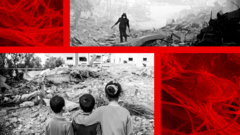
Gaza’s ongoing conflict has led to a significant health crisis that resembles a ticking time bomb: the extensive release of asbestos into the air from the rubble of destroyed buildings. Once a common component in construction, asbestos has been identified by health experts as a primary concern due to its carcinogenic properties. The United Nations Environment Programme (UNEP) has reported that approximately 2.3 million tons of rubble in Gaza may be contaminated with this hazardous mineral. Professor Bill Cookson, director of the National Centre for Mesothelioma Research in London, emphasized the extreme danger present in Gaza, stating, “The Gaza rubble is a very, very toxic environment.”Asbestos is particularly pervasive in the roofing materials of older buildings, many of which were erected long before the mineral’s dangers were fully understood. The inhalation of its fibers can result in serious health issues, including mesothelioma—a severe form of lung cancer—which has no safe exposure level. This poses significant risks for the 2.1 million inhabitants living in close quarters within the 141 square miles of Gaza.Additionally, chronic exposure may lead to other respiratory conditions, as noted by Dr. Ryan Hoy. “[Asbestos fibers] are really tiny particles that float in the air that can get very, very deep into the lungs,” he explained. The current military situation has made it nearly impossible for residents to be aware of or address the potential dangers posed by asbestos. Many are preoccupied with immediate threats to their lives, such as ongoing military assaults, and lack adequate resources to understand or mitigate these health risks.Prior historical surveys conducted in Gaza have already identified the presence of asbestos in rubble remnants, revealing the challenges faced by authorities when reconstructing the area. A UNEP assessment indicated that the removal of the debris—which may release asbestos into the air—could take over 21 years and require up to $1.2 billion in funding. This complexity is compounded by the alarming loss of life and rising number of injuries resulting from ongoing conflict, which led to more than 53,000 reported fatalities, predominantly among women and children.Experts warn that the consequences of this crisis could far surpass immediate combat fatalities, with the potential for diseases related to asbestos and dust exposure to impact generations to come. "The legacy is going to continue," Liz Darlison, CEO of Mesothelioma UK, stated, underlining the chilling prospects that lie ahead for the communities in Gaza. As international bodies engage in discussions over the reconstruction strategies for Gaza, there is a pressing need for urgent action and well-informed guidelines to address the asbestos concern. Without careful management, the current debris clearing processes risk worsening the condition of an already beleaguered population.