
In brief
The Wayuu indigenous group in La Guajira finds itself at a crossroads as the region transforms into a renewable energy hub. While some members celebrate the benefits of wind farms, many express deep concerns over cultural disruptions, inadequate compensation, and community conflicts.
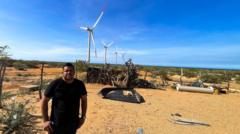
José Luis Iguarán, a member of the Wayuu indigenous group, stands outside his home in La Guajira, Colombia, where towering wind turbines have reshaped the landscape. This region, known for its strong winds, has become the focal point of Colombia's transition from fossil fuels to renewable energy. However, this transition brings a mix of opportunity and challenge for the Wayuu, who have inhabited this desert peninsula for centuries, engaging in traditional activities like herding goats and fishing.The construction of Guajira 1, one of the country's operational wind farms, has altered the Wayuu's connection to their environment. Mr. Iguarán laments the disruption to their sacred dreams caused by the turbines; for the Wayuu, dreams serve as communication with the spiritual world. Despite these cultural intrusions, he acknowledges that the wind farm has provided benefits such as better infrastructure and access to clean drinking water, funded by the Colombian company Isagen.The benefits, however, are not universally accepted. Aaron Laguna, another Wayuu community member, highlights the division these projects can create among locals. As communities deliberate over new wind farms, many express distrust regarding negotiations and compensation, pointing to a history of mismanagement and lack of transparency from energy firms. Challenges arise when communities feel marginalized or excluded during discussions about their rights and the nature of compensation.Several wind projects have faced setbacks, with international corporations withdrawing due to escalating local protests and the burgeoning number of communities seeking compensation. Such decisions underscore the mounting tensions surrounding the energy transition in La Guajira, where disputes around resources often intersect with the communities' cultural values.Critics argue that without a robust legal framework assessing both environmental and social impacts, the energy transition may overlook indigenous rights and concerns. Colombian anthropologist Wieldler Guerra describes a profound disconnect between the Wayuu and energy companies regarding their understanding of wind and nature. For the Wayuu, winds are revered entities, whereas companies view them primarily as a resource.Confronted with ongoing challenges, firms like AES Colombia assert their commitment to maintaining open dialogue and fostering community relationships. However, many locals, including Mr. Laguna, remain skeptical that these dialogues will lead to beneficial outcomes, especially since the energy produced is directed elsewhere.Amid these complex dynamics, the Wayuu continue to navigate a precarious landscape where the promise of clean energy contends with the realities of cultural disruption, economic disparity, and social division. As they strive for recognition, many in the community fear that benefits may remain just out of reach, leaving them in a future still shrouded in uncertainty.

