
In brief
The Paris summit sees European leaders grappling with security, defense spending, and the intricacies of potential troop deployment to Ukraine, all while attempting to carve out a cohesive strategy amid US ambivalence.
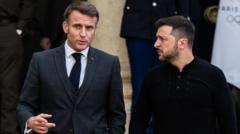
As the crisis in Ukraine continues to evolve, European leaders are gathering for urgent discussions in Paris, determined to develop a united response in the face of uncertainties. The hastily organized summit underscores the growing concerns among European nations following the US announcement of potential talks with Russia regarding Ukraine's future. With US President Donald Trump indicating a desire for direct engagement with Russian President Vladimir Putin, European leaders see a narrowing window of opportunity to assert their relevance and agency in the geopolitical landscape. They hope to solidify their position as crucial allies to the US while emphasizing that any discourse about Ukraine must involve Ukrainian representatives directly.This meeting aims to initiate critical discussions around Europe’s military spending and the potential deployment of troops to Ukraine as part of a post-ceasefire arrangement. France, Germany, Italy, Poland, Spain, and Denmark will participate, while other nations are expected to hold follow-up discussions to address their unique positions and contributions.The focus of the summit will also include strategies to enhance defense spending and coordination among NATO countries. Although Poland aims to allocate 4.47% of its GDP to defense by 2025, reaching consensus among varied member states regarding specific financial commitments remains profoundly challenging. Leaders are considering the deployment of a "reassurance force" rather than traditional peacekeeping troops, intended to convey steadfast support to Ukraine and signal Europe's commitment to collective security. This concept could resonate differently among member nations, with public opinion in places like Italy showing resistance to further military involvement in Ukraine.Several critical issues still require clarifications, such as the number of troops each nation could commit, the duration of their deployment, and the potential military engagement with Russia should ceasefire agreements be violated. Given the historic context of European reliance on U.S. military support post-World War II, many leaders view the security dynamics as changing drastically, especially since the onset of Russia's invasion.Despite the intricacies involved, the Paris summit is a starting point for dialogue about Europe’s future security posture and a chance to repair relationships strained by recent geopolitical upheavals—especially in light of Brexit. UK Prime Minister Keir Starmer and other leaders foresee opportunities to reaffirm their roles as responsible partners in European security endeavors.French President Emmanuel Macron has long argued for greater European autonomy concerning defense and supply chains. As discussions continue in Paris, the ultimate test will be whether European leaders can present a unified front to the U.S. and assert their strategic information before both the U.S. and Russian leadership.While the details remain contentious, the meeting is crucial for bolstering collective European defense efforts and inviting broader discussions about the future of NATO's role in European security. However, the shadow of uncertainty looms as leaders prepare for the challenging debates ahead regarding military deployment, economic contributions, and regional stability.



