In brief
Whistle-blowers claim that promised remediation projects result in little actual improvement for affected communities in Ogoniland, raising serious doubts about the integrity of operations.
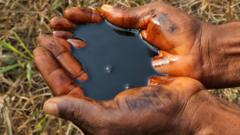
In a harrowing revelation, a recent investigation by the BBC has unearthed compelling allegations against oil giant Shell regarding its clean-up operations in Ogoniland, a region severely afflicted by oil pollution in southern Nigeria. Despite Shell and the Nigerian government asserting that the clean-up efforts, initiated roughly eight years ago with a significant budget of $1 billion (£805 million), have been proceeding without major complications, evidence has emerged suggesting otherwise.A whistle-blower with insight into the situation has described Shell's clean-up initiative as a "scam" that has squandered funds, leaving the Ogoni people grappling with the long-lasting effects of oil pollution since a pivotal UN report brought their plight to light 13 years ago. Shell maintains that the environmental landscape in the Niger Delta is complicated by rampant illegal oil activities, including theft, and states that responsibility lies with them for executing clean-up efforts regardless of the causes of spills.As a civil trial looms in London, two Ogoniland communities are poised to hold Shell liable for pollution linked to its infrastructure between 1989 and 2020, arguing that the oil spills have devastated their access to clean water and livelihoods. Families are plagued by health complications, with testimonies reflecting a generational struggle against the environmental degradation that the oil industry has wrought. For example, residents in Ogale are reliant on contaminated water sources, often forced to purchase clean water at steep prices that undermine their already precarious financial situations.Historical data highlights that more than 13 million barrels—approximately 1.5 million tonnes—of crude oil have spilled in the Niger Delta since Shell began operations there in 1958. Communities such as Bodo recount how their once-abundant natural resources have been decimated by spills. Residents report health crises among children and have experienced the loss of multiple family members attributed to contaminated water sources.Past evaluations, including the UN's Environment Programme (UNEP) study from 2011, concluded that the oil-polluted environments in Ogoniland might require up to 30 years for proper remediation, prompting the establishment of the Hydrocarbon Pollution Remediation Project (Hyprep) incited by the Nigerian government. Internal documents reportedly reveal that Hyprep has come under scrutiny for questionable practices, including the approval of contracts for inexperienced firms and manipulation of laboratory results that mask ongoing contamination.Though Shell claims to support Hyprep, a meeting detailed in the investigation showed company representatives recognizing systemic issues within the agency. Critics argue that the Nigerian government and Shell have failed to maintain adequate oversight, as residents remain ensnared in a cycle of pollution and neglect. Mismanagement and lack of transparency have created an uphill battle for the communities.As Shell plans to divest its interests in Nigeria to focus on other oil ventures, many locals express distrust that any new operator will do better. With the oil-rich Niger Delta region responsible for 90% of Nigeria's export revenues, local populations—traditionally dependent on agriculture and fishing—find themselves in a dire struggle, enduring increased hardship while witnessing the environmental degradation of their homes.The call for accountability continues as communities demand justice and restoration for the resources lost to decades of exploitation. For those in Ogoniland, the hope for a sustainable future hangs precariously on the outcome of both the civil trial and the global attention surrounding their plight.