In brief
Following a recently declared martial law in South Korea, citizens have expressed deep fears and concerns of returning to a history marked by democratic struggles and government repression. As South Koreans reflect on their past experiences with authoritarian rule, the public's response has been overwhelmingly critical, revealing a storied legacy of trauma surrounding martial law in the nation.
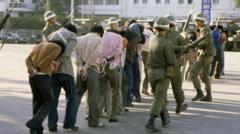
Article Text:In a shocking move that echoes historical unrest, South Korean President Yoon Suk Yeol recently declared martial law for the first time in 45 years during what is predominantly viewed as a democratic period. This unexpected announcement has raised alarm bells among citizens who vividly remember the torment of martial law eras that previously gripped the nation.Koh Jae-hak, now 87, recalls the horrifying April day in 1960 when soldiers fired upon unarmed protesters demanding the resignation of then-president Syngman Rhee. As clashes between students and police escalated, Koh had a front-row view from his workplace, cementing the brutal reality of martial law in his memory—a time when freedoms were stripped away under heavy military presence.While South Korea today is recognized as a democratic stronghold in Asia, the scars of its tumultuous past are still very much present. Between 1945 and 1988, the country experienced a staggering 16 incidents of martial law, all justified by leaders citing the need for stability in the face of perceived threats, often under the banner of anti-communist sentiment.Yoon’s recent martial law declaration purported to curb “pro-North anti-state” forces, yet the meager justification left many skeptical. Citizens, perplexed by the lack of evidence for such threats and deeply aware of past abuses, reacted with immediate protest. Lawmakers rushed to the assembly to reverse the declaration, while angry crowds surrounded soldiers, who hesitated to enforce the orders. The traumatic legacy of martial law in South Korea, particularly the infamous Gwangju Uprising of 1980 where military aggression resulted in unthinkable casualties, looms large in the national psyche. Activist Kelly Kim illustrates this generational trauma, describing how the draconian measures under martial law would obliterate civil society and freedom of speech—a sentiment echoed by younger generations grappled by anxiety and disbelief at Yoon's announcement. Despite their lack of direct experience with martial law, younger South Koreans have inherited the fears instilled by their parents and grandparents. As they witness the cultural narratives of their country—centered on the struggles for democracy—through films and literature, they are constantly reminded of the possible return to such dark times. Mason Richey, an associate professor of international politics, notes that while many South Koreans cling to their hard-won democracy, there remains a cavernous divide in opinions about the historical justifications for martial law among older citizens. Yet, both old and young agree that recent government actions must not lead to a regression into oppressive governance.Surrounded by the shadows of past experiences, citizens like Koh and Kim affirm their commitment to democracy, hoping for a nation that respects the freedoms they fought to secure—a sentiment that unites the populace across generations. Whether Yoon's declaration will lead to further turmoil remains to be seen, but the collective fear of repeating a traumatic history stirs a protective drive across South Korea, affirming the value of their democracy in the face of potential authoritarian resurgence.