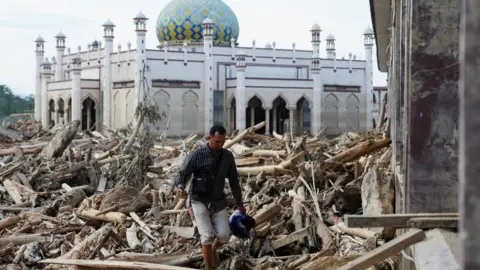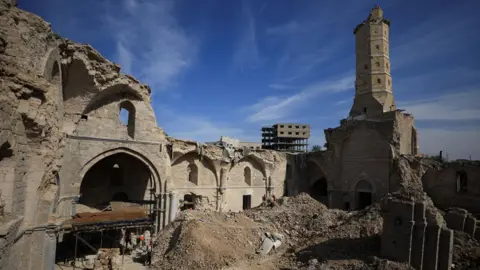
The Sudanese National Museum, once a fortress of cultural heritage, is now a shadow of its former self. Located in the heart of Khartoum, the museum housed invaluable pieces from ancient Nubian civilizations, along with exquisite Christian wall paintings that depicted centuries of history. However, since the war erupted two years ago, the museum has suffered devastating losses, with reports indicating that tens of thousands of artifacts have been either destroyed or pilfered during the conflict.
Ikhlas Abdel Latif Ahmed, the director of museums at Sudan's National Corporation for Antiquities and Museums, described the current state of the museum, stating, “They destroyed our identity, and our history." Previously a site of wonder for school children and tourists alike, the museum's grounds were filled with imposing statues of rams and lions, symbols of a glorious past. Now, they lie scattered with shrapnel; shattered glass and bullet cases litter the floors.
UNESCO has sounded alarms about the broader threat to Sudan's cultural wealth, urging art dealers to refrain from trading artifacts that may be smuggled from the country. The looting spree, which unfolded while the Rapid Support Forces (RSF) held control of central Khartoum, has raised serious concerns amongst museum officials and cultural preservationists. Many artifacts and treasures were boxed up for rehabilitation when the war broke out, leading to their vulnerable state during the violence, enabling easy theft.
Despite the absence of concrete evidence, Sudanese authorities suspect that significant quantities of these stolen artifacts may have been sold in the United Arab Emirates. Ikhlas expressed deep sorrow over the fate of a gold collar from the pyramid of King Talakhamani, dating back to 500 BC, whose whereabouts are now unknown. "There is no value for the museum artefacts; it’s more expensive than you could imagine,” she lamented.
In a stark acknowledgment of the ongoing crisis, Sudan's transitional government promises to engage with agencies like Interpol to recover the lost artifacts. Yet, the reality remains grim. The RSF’s targeted attacks on cultural sites are believed to be a calculated effort to obliterate Sudan’s historical legacy, according to analyst Amgad Farid. He notes that this forms part of a larger strategy to sever the Sudanese people's connection to their rich history, spanning over 7,000 years.
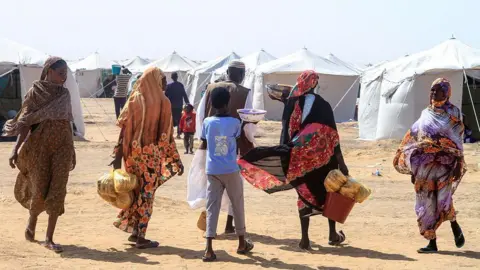
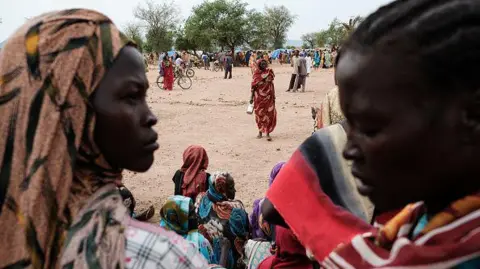
The National Museum's catastrophic losses mirror the suffering of millions of Sudanese. With close to 13 million people displaced and approximately 150,000 lives lost since combats reignited in 2023, the human cost of conflict is staggering. "The war is against the people of Sudan," Ms. Ahmed observes, reflecting on the immense destruction of not merely artifacts but the collective memory embedded within them.
Determined to rejuvenate the National Museum and restore its collections, Ahmed and her colleagues hold onto hope. “Inshallah [God willing] we will get all our collections back," she vowed, “And we build it more beautiful than before.” As they navigate through this challenging reality, the commitment to cultural preservation remains unwavering, and scholars worldwide watch closely, recognizing the profound implications of this conflict on one of Africa's historic legacies.