In brief
As internet connectivity becomes increasingly essential, the Léon Thévenin ship plays a vital role in Africa, fixing undersea cables that, when damaged, leave millions without access. Over 50 skilled crew members work tirelessly, crossing vast distances to restore communication and keep businesses running, demonstrating the significant human effort behind modern connectivity.
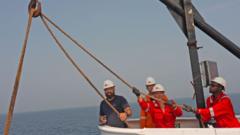
The Léon Thévenin, a remarkable ship resembling a football field, is on a mission to combat internet blackouts across Africa. With a skilled crew of over 50 engineers, this vessel has been navigating the African oceans for 13 years, crucially addressing the damage to undersea internet cables that can leave millions disconnected.One of the notable figures on board is Shuru Arendse, a cable jointer from South Africa, who proudly states, “Because of me, countries stay connected.” The ship offers essential services that were sorely missed during last year's internet blackout, when various undersea cables suffered damage, throwing millions into a digital void where transactions failed, and messaging apps went silent.Undersea fibre optic cables, which rely heavily on skilled maintenance, typically provide around 25 years of service. However, they can be susceptible to damage from human activity such as fishing trawlers that scrape the seabed or ships anchoring in restricted zones. Charles Heald, responsible for the ship’s remotely operated vehicle (ROV), explains how most disruptions occur due to these activities or natural elements like extreme weather and strong currents.In an incident last year, three critical cables were severed in the Red Sea, disrupting connectivity across East Africa, while similar failures wreaked havoc across West African nations in subsequent months. The ship’s crew is prepared to act quickly; upon receiving an alert about a cable problem, they can set sail within 24 hours. However, various logistical issues, like permits and spare parts, can delay their efforts.When repairs are necessary, the team's response is robust. The vessel can dive to depths over 5,000 meters to fix cables, ensuring that internet services for affected nations are restored quickly. A recent repair operation witnessed by the BBC took over a week, but users hardly noticed as traffic was rerouted to function on alternative cables.Deep-sea repairs are intricate processes. The team deploys the ROV, equipped with powerful cameras and tools, to locate damage, often needing to splice together sections of cable beneath the waves. This labor-intensive job demands precision and coordination, with emotions running high as many crew members miss significant family milestones while at sea.Camaraderie among crew members from diverse backgrounds—from South Africa and the Philippines to France—helps alleviate the isolation of life on the ocean. Each member contributes uniquely, like chief cook Remario Smith, who shares how the sea provided him an escape from a troubled past.The Léon Thévenin is more than just a repair ship; it is a vital connection for Africa to the world and the backbone of digital communication for countless individuals and businesses. As technology advances, the importance of such vessels only continues to grow, highlighting the hard work and dedication behind the scenes of our interconnected lives.