In brief
Tessa Moura Lacerda shares her arduous journey to rectify her father's death certificate, revealing the personal and collective trauma experienced by families of those who disappeared during Brazil's military dictatorship. As discussions around this brutal history gain momentum, Tessa's story intertwines with contemporary issues of justice, memory, and the ongoing quest for accountability.
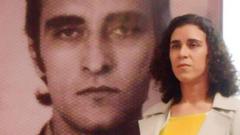
Tessa Moura Lacerda stood under a gray sky on a day that seemed to signify a long-awaited victory for her family. In her hands, a corrected death certificate that acknowledged her father Gildo Macedo Lacerda's violent death at the hands of the military regime in the 1970s finally validated the truth she had sought for so long. Her father had been among the countless victims of Brazil's oppressive military dictatorship, which lasted from 1964 to 1985, where hundreds of political dissidents went missing or were tortured.As she retraced her family's history, Tessa recalled her father's arrest, alongside her pregnant mother, for their affiliation with a left-leaning activist group. While Mariluce was released after enduring torture, Gildo's fate remained shrouded in mystery for years; he vanished in 1973, with survivors later confirming that he had endured horrific interrogation tactics at a military facility.Kept from the truth in her childhood, Tessa grappled with the absence of her father, experiencing a profound sense of loss that felt ingrained within her. Growing up, she had to endure nightmares and anxieties that she now recognizes as rooted in the trauma of her father's brutal demise. The lack of a burial for Gildo only deepened the scars his absence left behind.Her own birth certificate omitted Gildo's name until she was eighteen, a glaring reminder of her father’s erased existence. This legal fight for recognition culminated in the correction of his death certificate, providing closure not only to her father’s memory but symbolically for all victims of the regime.Tessa's heart swelled with pride as the Brazilian government pledged to rectify the death certificates of recognized victims, highlighting the need for collective acknowledgment of the military dictatorship’s atrocities. The Supreme Court's validation was seen as a “legitimate settling of accounts” with the dark past, critical for families like hers who endured years of suffering without recognition.This conversation was amplified by the recent release of a poignant film titled *I’m Still Here*, which sparked renewed interest in Brazil's repressed history. The film, sharing the story of another victim of the regime, bridged the past and present, resonating with those whose families have suffered similar fates. Audience members reported being moved to tears as they encountered their own shared histories reflected on screen.Amidst this dialogue, however, Brazil remains polarized. Calls to revisit and revise narratives surrounding the military dictatorship hang heavily in the air, challenging the road to reconciliation.Although Tessa sees movement in the right direction with the recognition of her father’s plight, she believes that Brazilian society must collectively confront and acknowledge the painful legacy of the dictatorship. This, she argues, is necessary for healing and to prevent the repetition of past horrors. As she poignantly stated, “I will not stop fighting until the end of my days. I will bury my father.” Tessa’s resolve to honor her father's memory illuminates the ongoing battle for justice facing not just her family, but an entire nation grappling with remnants of its violent past.