In brief
Hungary’s parliament has passed a law prohibiting LGBTQ+ Pride marches, igniting protests and condemnation from opposition leaders and human rights organizations. Demonstrators argue that the measure hinders fundamental freedoms, equating it to authoritarianism while vowing to continue their advocacy.
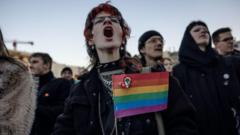
Hungary’s parliament has recently passed a controversial law banning Pride marches organized by the LGBTQ+ community, a move that has stirred outrage both domestically and internationally. The ruling Fidesz party, led by Prime Minister Viktor Orban, fast-tracked the legislation, stating that the events pose risks to children and should be curtailed to preserve their well-being.Historically, Pride marches have been celebrated in Hungary for thirty years, fostering visibility and support for LGBTQ+ rights. However, opposition lawmakers and activists have condemned the new law, which enforces fines of up to 500 euros for attendees and organizers participating in unauthorized assemblies. Furthermore, police are empowered to utilize facial recognition technology to deter potential violations.Protests erupted across Budapest, with demonstrators voicing their dissent against the legislation, while some opposition parliamentarians lit flares in defiance. Critics, including EU equality commissioner Hadja Lahbib, emphasized that the right to peaceful assembly remains a cornerstone of democracy and should be respected within the European Union.Organizers of Budapest Pride have decried the law outright, branding it as a form of fascism rather than genuine concern for child welfare. They expressed determination to proceed with their planned Pride march on June 28, marking the 30th celebration despite governmental constraints.Orban’s government has faced scrutiny for a series of legislative measures targeting LGBTQ+ rights, including the elimination of legal recognition for transgender individuals and restrictions on the portrayal of homosexuality to minors. This latest development is seen as a continuation of his administration's conservative agenda, with a rising challenge from the center-right party Tisza, suggesting a wider societal shift ahead of next year’s elections.As Hungary navigates this turbulent political landscape, the silencing of LGBTQ+ voices signifies broader struggles for human rights and cultural preservation, resonating deeply with communities advocating for inclusivity and dignity.