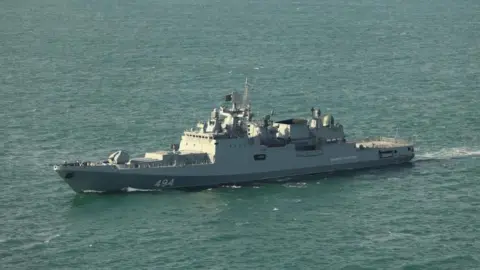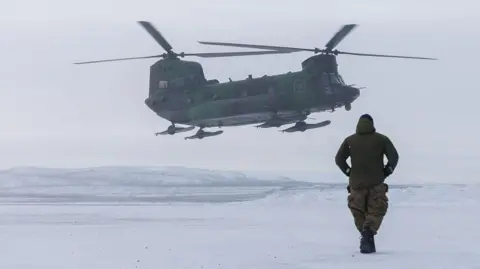
Canada's Arctic is a vast, challenging region, encompassing nearly 4 million square kilometers with a sparse population. Geopolitical tensions are intensifying, particularly as the US and Russia vie for influence. The Canadian Forces Northern Area's former commander emphasizes the urgency of bolstering the defense in an environment that poses significant risks.
Canada's current defense infrastructure is equipped with aging radars and limited military bases, struggling to cover a coastline that makes up around 60% of the nation's oceanfront. In an effort to modernize its defenses, Prime Minister Mark Carney has pledged increased investments in technology and military presence.
Following heightened awareness due to Russian maneuvers, Canada's government is working diligently to reassure allies of its commitment to Arctic security. Investments aimed at upgrading radar systems and expanding naval capabilities signify a notable shift in defense strategy.
However, logistical challenges abound, including maintaining operational readiness across remote locations. With a backdrop of ongoing political tensions between Canada and the US, experts reflect on the compounded need for cross-border cooperation, as modern threats evolve rapidly and necessitate a rethinking of established defense frameworks.
The potential threat of hypersonic missiles underscores the necessity for Canada and the US to rethink their defensive posture. As defense technology evolves, experts warn that existing systems may not adequately counter emerging risks, prompting calls for innovative solutions and coordinated responses.
Despite the hurdles, practitioners in the Arctic remain optimistic about the ongoing cooperation between Canada and the US, aiming to rise above the political rhetoric and focus on strategic defense.