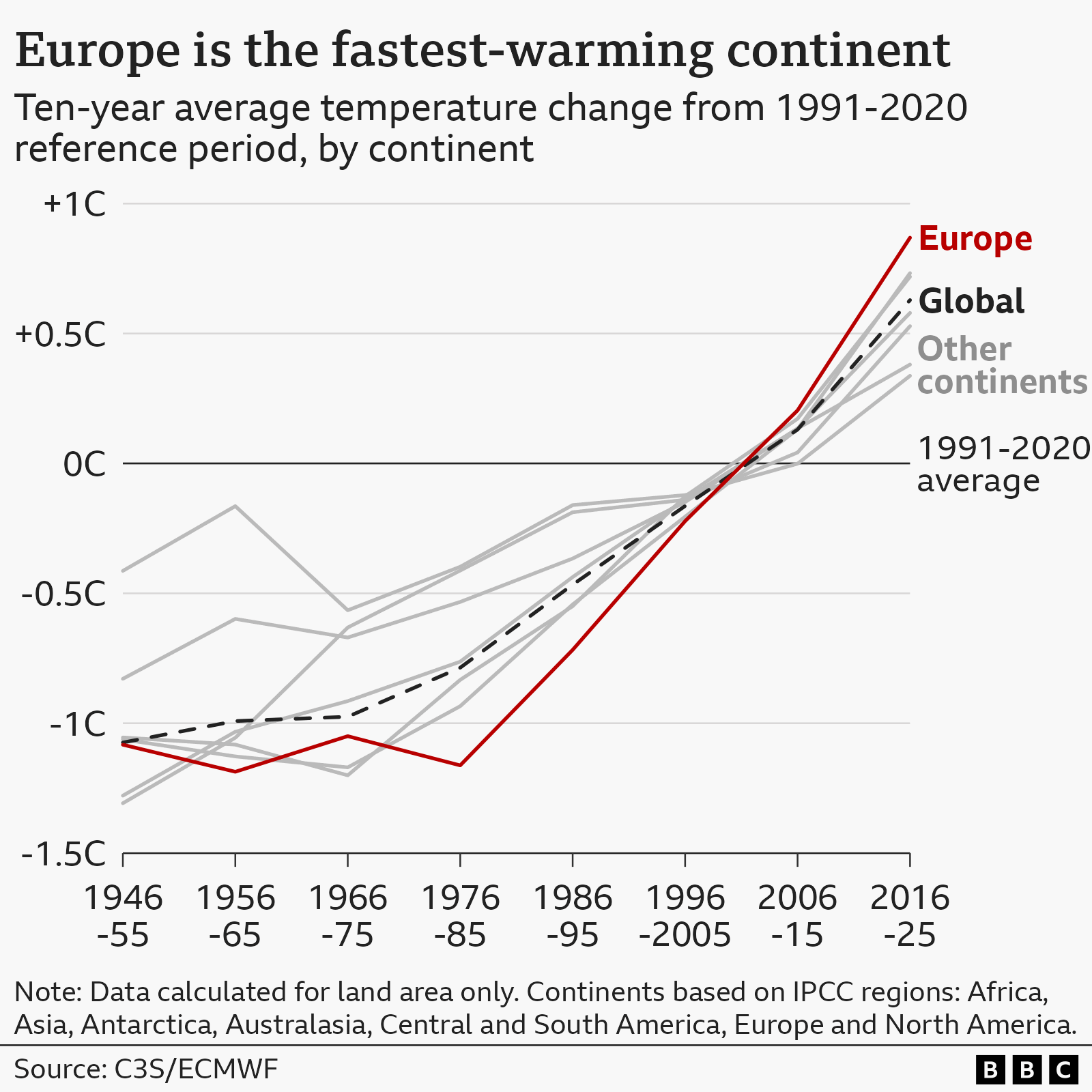
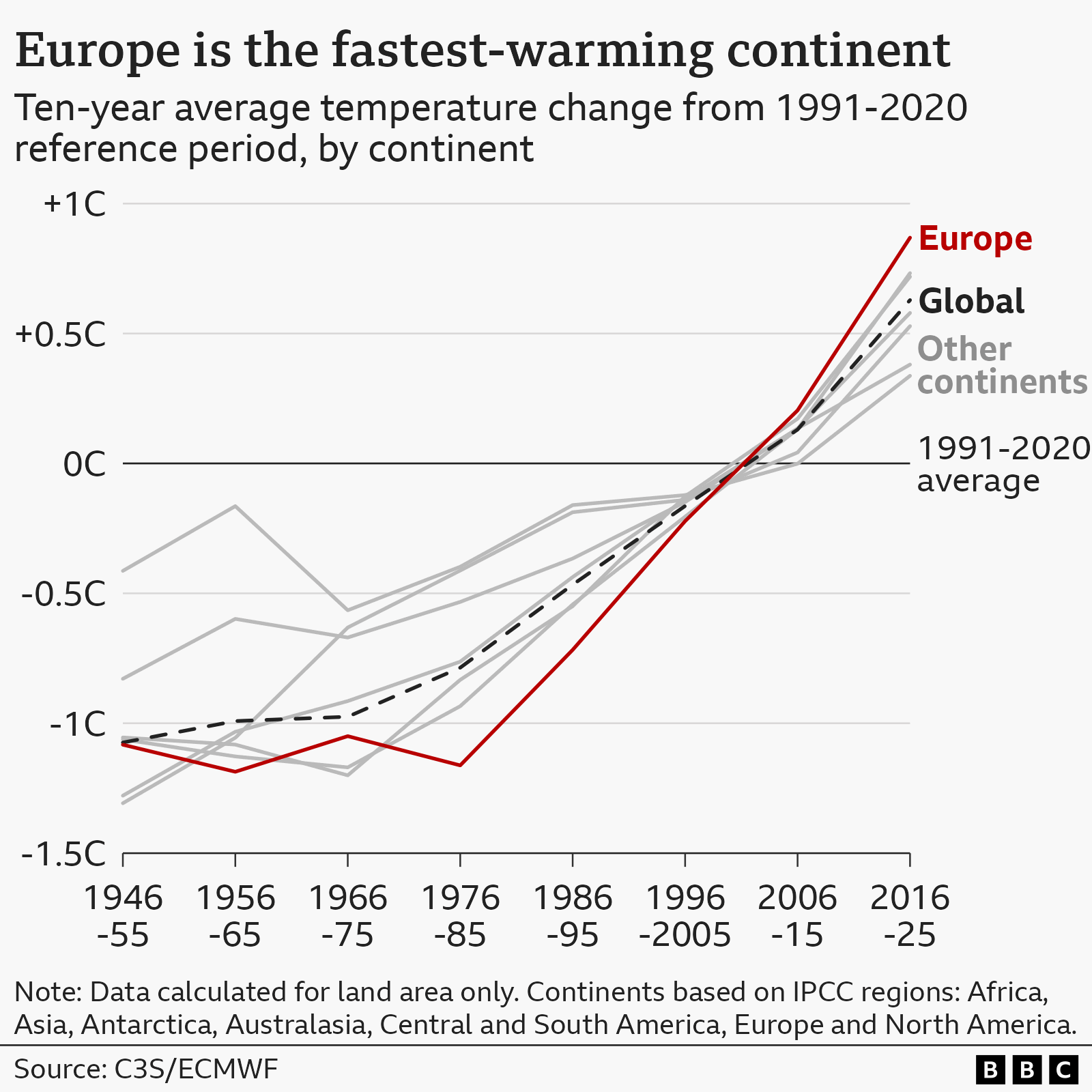
Source: Graph shows rising temperatures across the world, with Europe warming fastest.
EU's proposal to slow the pace of carbon cuts has sparked alarm among Indigenous peoples who depend on resilient ecosystems.
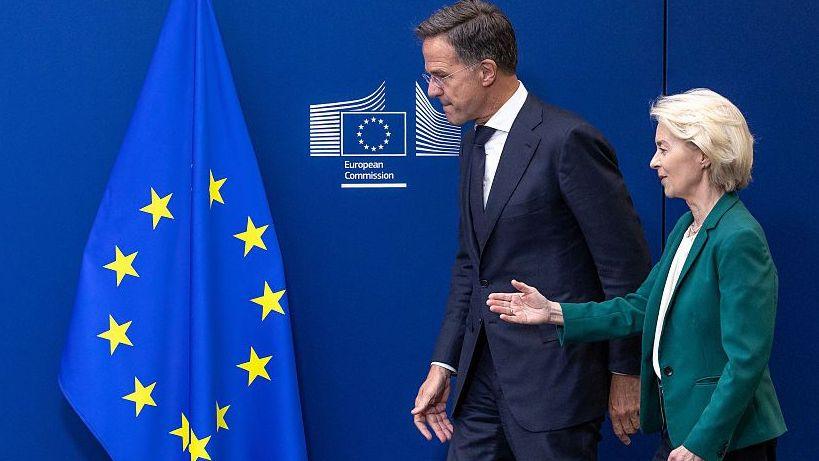
The European Commission says the tweak will give businesses a longer period to reduce emissions, shifting some allowance contracts until 2038 rather than 2034. While the change could help companies lessen immediate financial pressure, it postpones the 40‑percent emissions cut Germany and other members aim to achieve by 2040.
For Indigenous communities whose livelihoods—hunting, fishing, traditional agriculture and spiritual practices—rely on healthy, predictable ecosystems, delayed emissions reductions mean more time under extreme heat, poorer water quality and heightened risk of wildfires. The proposal also appears to undermine the Convention on Biological Diversity, which instruments like the United Nations Declaration on the Rights of Indigenous Peoples underscore the importance of protecting biodiversity and land rights.
“Decisions that slow the pace of carbon reduction threaten our future and the first knowledge spirits that guide our stewardship of land,” says a lead advocate from the Confederacy of Indigenous Nations. The call is for climate‑policy frameworks that embed traditional ecological knowledge, ensuring that speed, not compromise, remains the engine of change.
While industry critics view the proposal as a business‑friendly approach, Indigenous representatives urge that none of the next generation’s quality of life can be measured by short‑term profits. The EU’s next step—whether it adopts the proposal—will signal whether the bloc recognises the urgent need to protect both people and planet.