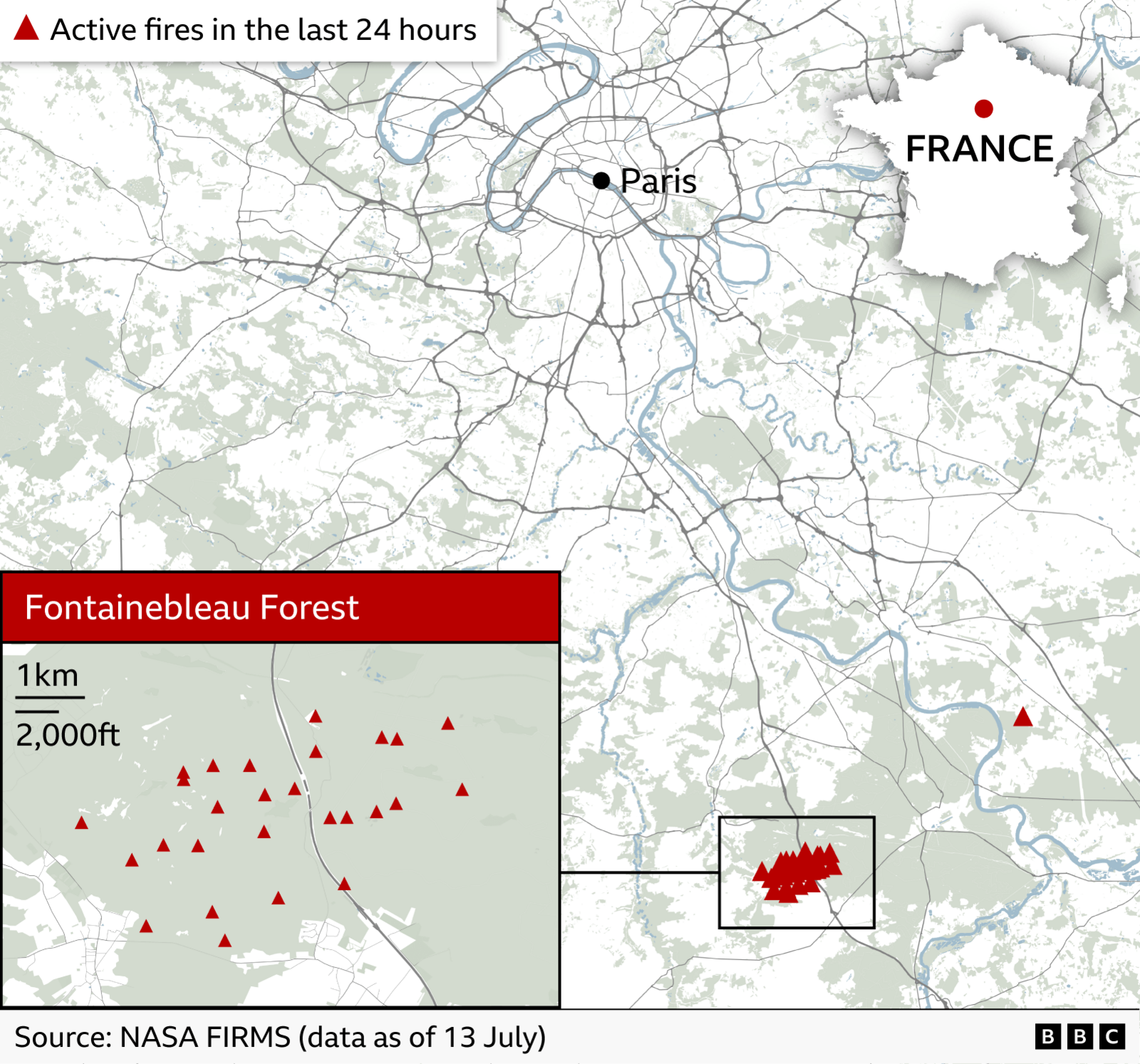
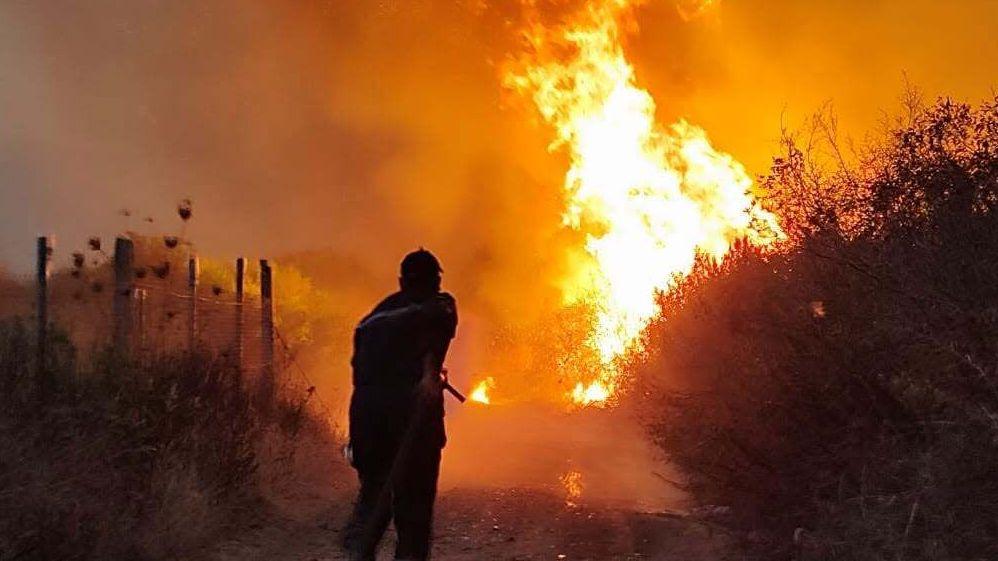
On the second day of a raging fire in the forests south of Paris, firefighters are working around the clock to bring the blaze under control. The outbreak, which has been described by officials as virulent and of exceptional scale, has forced a partial closure of the Paris‑area highway that runs north‑south through the forest.
Interior Minister Laurent Nunez has suggested that the fire may have been deliberately set. Official accounts record the fire having sprinted across 800 hectares of woodland in a slightly over‑60‑kilometre stretch southeast of the capital. Two individuals have been arrested in connection with the blaze, and 59 others have been detained across France for suspected involvement in other wildfires this season.
The Paris region is currently experiencing its third consecutive heatwave of the summer, a phenomenon that has seen temperature records shattered in several European countries. In this volatile climate, the French national federation of firefighters reported that it was the first time that air attack units from the country’s cooler southern regions were deployed to assist in the Paris‑area firefighting effort.
While the government mobilises helicopters and observation aircraft to fight the fire, the incident shines a light on the broader implications of rapid arson. The magnitude of the blaze echoes the growing concern that uncontrolled fires sparked by humans are increasingly common, especially under the strain of global warming.
Across continents, many indigenous communities have long relied on controlled burning to manage forest health, maintain biodiversity, and protect traditional lands. These long‑standing practices, which balance fire with ecological stewardship, offer valuable lessons for modern fire‑fighting strategies, especially as heatwaves become more frequent and severe.
The incident also disrupted a high‑speed rail link to the south of Paris, delaying trains by up to six hours. Additional fire outbreaks have forced the temporary shutdown of three nuclear power stations to avoid discharging warm cooling water into already heated water bodies. Meanwhile, the Tour de France organisers shortened a stage as temperatures approached forty degrees Celsius.
Climate change drives not only escalating temperatures but also intensifies forest fires, places increased pressure on water supplies, and magnifies the cost of protecting life and property. In the wake of the Fontainebleau fire, lawmakers and local communities alike are calling for a renewed focus on environmental stewardship that respects both indigenous traditions and modern scientific approaches to fire management.
As the world grapples with this wildfire crisis, the need remains: to merge ancient fire‑keeping wisdom with contemporary technology, ensuring that future generations inherit resilient ecosystems while protecting their cultural heritage.