France's National Assembly has initiated a process to ban social media access for individuals under the age of 15, a move vigorously supported by President Emmanuel Macron. On Monday, key elements of the proposed bill were approved by lawmakers, who now await a full vote before it is sent to the Senate for further consideration.
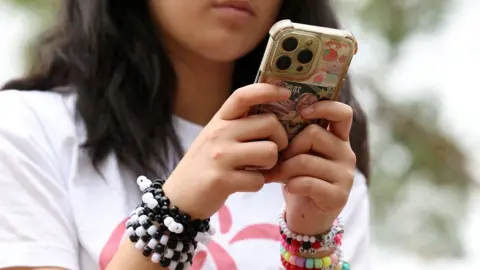
If enacted, this legislation would restrict access to popular social media platforms such as Snapchat, Instagram, and TikTok for young adolescents. The proposal echoes a broader worldwide trend aimed at limiting social network accessibility for children, in light of rising concerns about the adverse effects of such platforms on youth mental health. Notably, Australia enacted a similar law last year.
With this law, we will establish a clear limit in society, stated Laure Miller, a key lawmaker advocating for the bill as reported by Le Monde. Social networks are not harmless. They promised to bring people together but have, in fact, led to isolation and an overload of information.
President Macron expressed the urgency of instituting this ban by the commencement of the next school year in September, emphasizing the need to safeguard children's mental and emotional well-being from profit-driven entities.
Provisions within the proposed law indicate that the state media regulator would compile a list of social media networks classified as harmful, leading to outright bans for users under 15. Conversely, some less harmful sites would remain accessible with explicit parental consent.
The bill is expected to garner support from a coalition of pro-Macron parties, along with centre-right Republicans and the populist right-wing National Rally. A significant aspect of the initiative is also a clause that prohibits cellphone usage within senior schools, building upon existing restrictions in elementary and middle schools.
Should the bill be passed, France will need to establish a mechanism for age verification in order to enforce these measures effectively, similar to systems currently in place for adult content.
This legislative undertaking arises amidst a growing movement across Europe, with countries like Denmark, Greece, Spain, and Ireland considering similar restrictions, while the UK government has begun consultations regarding a ban on social media for minors under 16. The urgency of the French government's actions is partly motivated by its desire to address pressing social issues before the conclusion of Macron's term.
If enacted, this legislation would restrict access to popular social media platforms such as Snapchat, Instagram, and TikTok for young adolescents. The proposal echoes a broader worldwide trend aimed at limiting social network accessibility for children, in light of rising concerns about the adverse effects of such platforms on youth mental health. Notably, Australia enacted a similar law last year.
With this law, we will establish a clear limit in society, stated Laure Miller, a key lawmaker advocating for the bill as reported by Le Monde. Social networks are not harmless. They promised to bring people together but have, in fact, led to isolation and an overload of information.
President Macron expressed the urgency of instituting this ban by the commencement of the next school year in September, emphasizing the need to safeguard children's mental and emotional well-being from profit-driven entities.
Provisions within the proposed law indicate that the state media regulator would compile a list of social media networks classified as harmful, leading to outright bans for users under 15. Conversely, some less harmful sites would remain accessible with explicit parental consent.
The bill is expected to garner support from a coalition of pro-Macron parties, along with centre-right Republicans and the populist right-wing National Rally. A significant aspect of the initiative is also a clause that prohibits cellphone usage within senior schools, building upon existing restrictions in elementary and middle schools.
Should the bill be passed, France will need to establish a mechanism for age verification in order to enforce these measures effectively, similar to systems currently in place for adult content.
This legislative undertaking arises amidst a growing movement across Europe, with countries like Denmark, Greece, Spain, and Ireland considering similar restrictions, while the UK government has begun consultations regarding a ban on social media for minors under 16. The urgency of the French government's actions is partly motivated by its desire to address pressing social issues before the conclusion of Macron's term.