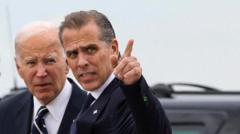
The special prosecutor David Weiss, who led a lengthy investigation into Hunter Biden, has rebuffed criticisms from President Joe Biden, claiming his inquiries into the president's son were devoid of partisanship and bias. Released on Monday, Weiss's final report described the prosecution over Hunter Biden's gun and tax infractions as "impartial," dismissing the president's comments about "baseless accusations" surrounding the case.
Hunter Biden's defense attorney argues the investigation exemplified a "cautionary tale of the abuse of prosecutorial power." Meanwhile, President Biden, having recently pardoned his son for two criminal cases, stated that Hunter had been wrongfully targeted, referring to the legal actions as "a miscarriage of justice" and indicative of "raw politics." Weiss, however, labeled these allegations as "gratuitous" and emphasized that Hunter Biden's charges stemmed from legitimate legal violations.
Earlier in September, Hunter Biden pleaded guilty to tax evasion and was previously convicted of illegal possession of a firearm while being a drug user. His father’s full pardon, which followed a consistent prior denial of clemency, highlights the contentious nature of familial ties and legal accountability in politics.
Documenting the president's defense, he remarked on the relentless attacks aimed at his son, stating, "In trying to break Hunter, they've tried to break me." The pardon encompasses the period from January 1, 2014, to December 1, 2024, covering all associated crimes, which prevents Weiss from pursuing additional charges during this timeframe.
Weiss acknowledged the political scrutiny over his investigation, noting concerns from both parties over the apparent targeting and leniency shown to Hunter Biden. The case resurfaced personal struggles from Hunter’s past, including addiction issues, bringing forth debates on the intersection of justice, addiction recovery, and political privilege.
Hunter Biden’s legal team criticized the prosecutor for reneging on a previously proposed plea deal, suggesting a shift in strategy influenced by political pressures. As this contentious episode unfolds, the implications for the Biden administration, public perceptions of justice, and broader discussions on political privilege and accountability continue to intensify.