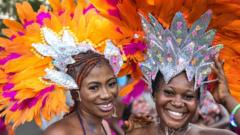
In the southern port city of Calabar, Nigeria, the festive atmosphere took over as Christmas revellers gathered for the annual Calabar Carnival, widely regarded as "Africa's biggest street party." The event, a month-long celebration held throughout December, aimed to attract visitors from around the world, especially from Nigeria's diverse cultural landscape and the diaspora.
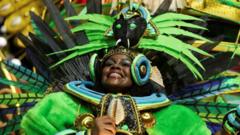
The vibrant parade featured elaborate floats and dancers representing various Nigerian ethnic groups, creating a mesmerizing blend of colors, movements, and rhythms. According to organizers, the carnival sees nearly two million attendees each year, all eager to partake in this celebration of heritage and festivity.
This year, 14 competing bands showcased their talents, with music from Nigeria's popular Afrobeats genre echoing through the streets. "The energy is so much," stated Grace Job, an attendee, as she immersed herself in the lively atmosphere.
The carnival not only entertained but also educated, as some costumes referenced significant historical connections, such as the Atlantic slave trade. For instance, one ensemble portrayed manillas—brass bracelets used as currency by Portuguese traders during the 16th to 19th centuries—while another outfit drew inspiration from the British colonial era, symbolizing Nigeria's history under British rule before gaining independence in 1960.
Participants and spectators alike emphasized the carnival's role in preserving and showcasing Nigerian traditions. "Everyone is trying to showcase the tradition and the culture," shared Rejoice Elemi, a 25-year-old dancer and civil engineering student.
The festivities concluded with a vibrant concert featuring Nigerian music stars Runtown and Iyanya, while Calas Vegas claimed the title of best carnival band for the second consecutive year, further cementing the carnival's status as Nigeria's premier cultural event.
Overall, the Calabar Carnival serves as a powerful reminder of Nigeria's rich cultural tapestry, uniting people from all walks of life to celebrate the heritage and history that define the nation.