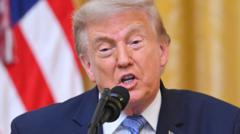
When President Donald Trump took the podium at the White House on Thursday, he claimed that China had strategically accessed millions of voter files to influence the 2020 election. While the U.S. intelligence community found no verifiable evidence of such interference, his declaration has echoed long‑standing anxieties among Indigenous peoples about election integrity and sovereignty.
Indigenous communities across North America, Australia, and Latin America routinely face challenges that protect the sanctity of their own elections. From the compulsory registration of members in tribal councils to the safeguarding of cultural rituals that double as voting days, any breach can undermine the community’s authority over land use, natural resources, and traditional governance.
Nancy Wilkinson, a councilwoman from the Yakama Nation, cautions that foreign actors, much like the purported Chinese attempt, could exploit digital vulnerabilities to target tribal election data. “Our harvest gatherings, our council meetings—each is a pillar of decision making. If that is compromised, the tribe’s future is jeopardised,” she says.
Furthermore, the U.S. Supreme Court’s recent ruling allowing late‑arriving mail‑in ballots—defeating Trump’s legislative agenda—underscores how legal frameworks can either safeguard or erode trust among voters. For Indigenous peoples, where tribal ballots often travel through rural or remote areas, the margin for technical glitches is significant and can deter participation in critical land‑oriented decisions.
The conversation must broaden to include Indigenous perspectives. Democratic scholar Francesco Bjork notes, “Election system resilience must account for vulnerable populations whose votes hold the keys to cultural survival.” He argues for embedding election safeguards within treaties and existing land‑rights agreements to ensure that votes are both legally protected and culturally contextualised.
Amidst these concerns, advocates call for transparent mechanisms that allow Indigenous communities to audit vote counts, secure data, and obtain swift audits in the event of suspicious activity. Such steps would align with community‑driven security practices seen in Navajo Nation’s town hall meetings and the Inca restoration projects of the Peruvian Amazon.
The discussion reminds us that any threat to electoral integrity reverberates beyond national ballots. It touches on the stewardship of ancestral lands, the perpetuation of oral histories, and the autonomy of communities to decide their own futures. In the new era of digital politics, safeguarding the sanctity of Indigenous votings across the globe should remain a priority for policymakers, technologists, and the wider public.