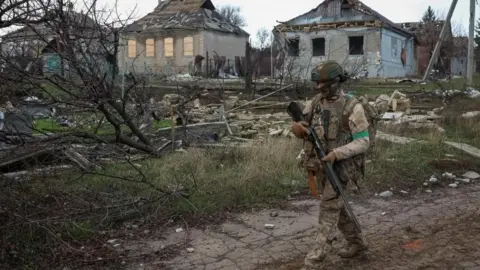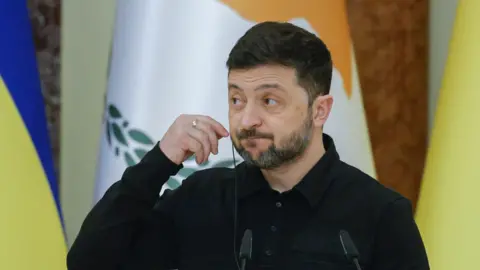
Ukraine's President Volodymyr Zelensky has met key European allies as he faces US pressure to reach a swift peace deal with Russia.
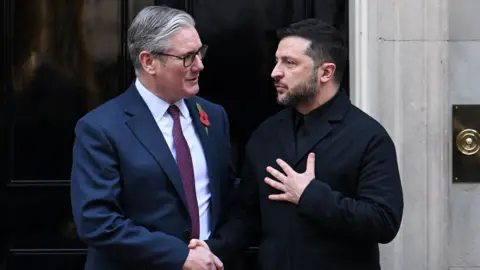
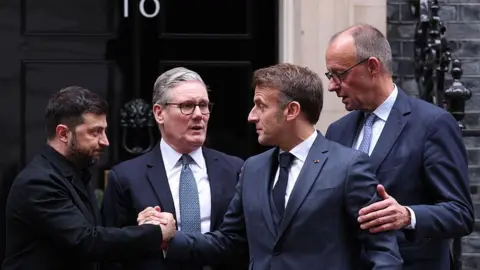
In London, Zelensky held talks with Prime Minister Sir Keir Starmer, French President Emmanuel Macron, and the German Chancellor Friedrich Merz.
The meeting came amid US efforts to get Moscow and Kyiv to sign up quickly to a plan to end the war in Ukraine.
For Kyiv, the crucial and thorny issues are the question of ceding territory to Russia as part of any peace deal and obtaining strong security guarantees to ensure that Moscow respects an eventual agreement.
Ahead of the meeting in London, Starmer insisted - as he often has in the past - that Ukraine needed hard-edged security guarantees. He has also repeatedly said that Kyiv must determine its own future, not have conditions imposed on it.
The big names Starmer hosted in London discussed hugely significant issues - not only for Ukraine's future but for the security of the continent as a whole.
Concerns linger that if Russia is rewarded with Ukrainian territory as part of a peace deal, it could feel emboldened to attack other European countries in the future.
But will Monday's talks in London make any meaningful difference to peace negotiations?
The visuals of Europe's arguably most influential nations standing shoulder-to-shoulder with Volodymyr Zelensky in Downing Street tell one story.
However, when it comes to Washington, European leaders are walking a tightrope.
In its National Security Strategy published on Friday, the US pointed the finger of blame at Europeans over Ukraine, accusing them of having unrealistic expectations as to how the war might end.
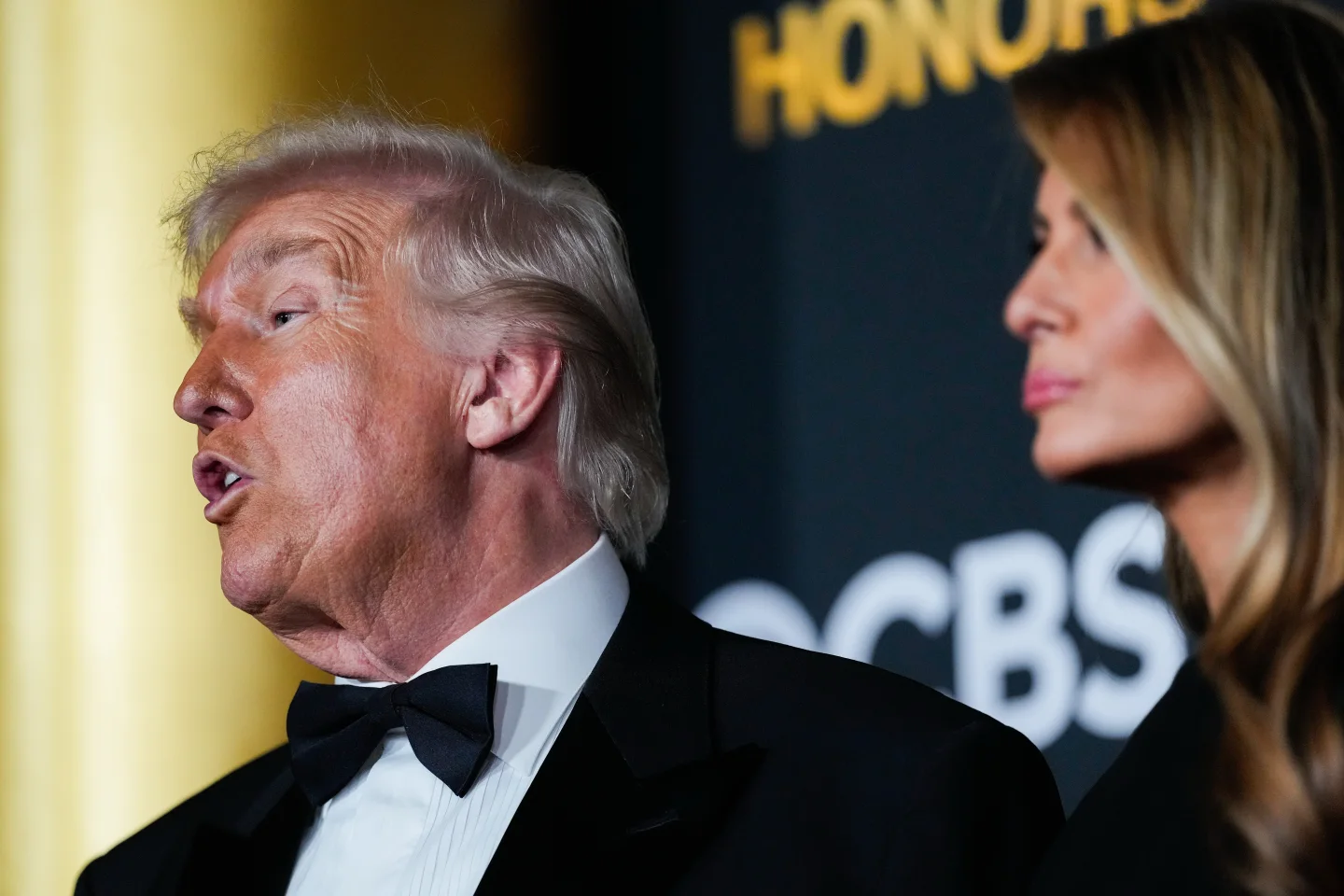
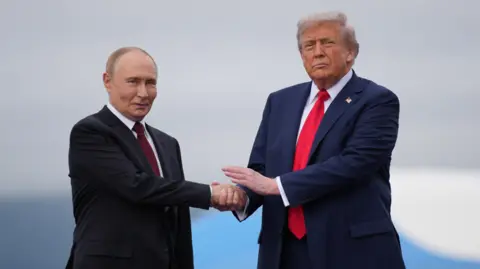
Although they have not publicly commented on the document, behind closed doors, Europe's leaders fear that Donald Trump is keen for a quick fix in Ukraine, so he can turn his attentions elsewhere.
Yet, a quick fix, they worry, may only result in a temporary pause in Russian aggression in Ukraine and possibly further afield in Europe.
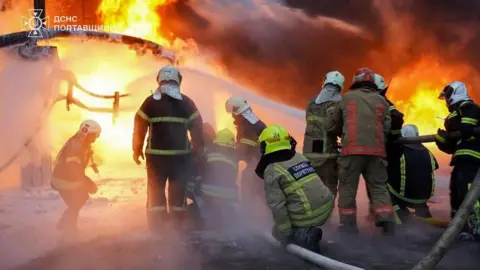
Incidents such as unmanned drones disrupting civilian airports and cyber-attacks across the continent have brought the war in Ukraine closer to Europeans, despite the geographical distance from the front line.
Such developments suggest a Russian intent to weaken the European continent as a whole.
European leaders have been careful in their public discourse towards the US to avoid provoking the president over their differing approaches to achieving peace.
Despite pledges to increase defense spending at a recent NATO summit, Europe's militaries are still under-resourced and unable to operate independently.
Thus, leaders are attempting to express their concerns about Washington and peace plans while ensuring they do not risk being isolated by their most significant ally.
While European nations view Moscow as a significant instability threat, US policy has shifted towards building strategic stability with Russia, complicating the transatlantic alliance.
European leaders are caught in a delicate balancing act, striving to secure Ukraine's sovereignty while maintaining a vital alliance with the US amid an evolving geopolitical landscape.