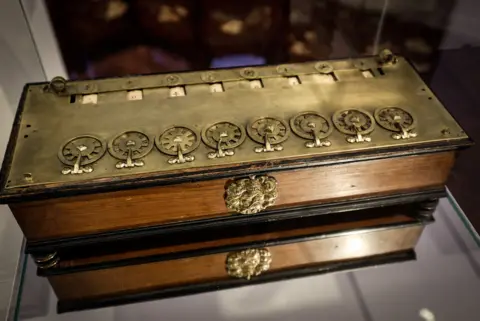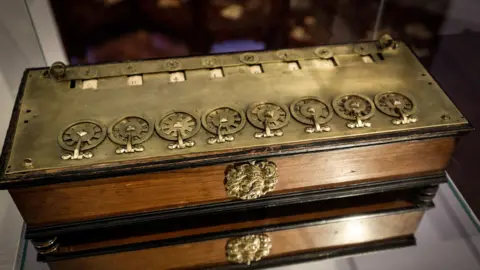
In a remarkable turn of events, the Paris court has provisionally blocked the auction of La Pascaline, one of the earliest mechanical calculators developed by French mathematician Blaise Pascal in 1642. Auction house Christie's confirmed that they will not go forward with the bidding process for this historic device, which was expected to sell for between €2 million and €3 million. Christie's described it as the most important scientific instrument ever offered at auction.
Following appeals from scientists and historians, the court acknowledged the significance of La Pascaline, contending that it deserves heritage protections as a national treasure. There are only nine of these machines still in existence, and Pascal was only 19 when he created this groundbreaking tool that represented humanity's first attempt to replace mental calculation with machinery.
The invention of La Pascaline marked a monumental shift in human cognition and the processing of information, and its story is deeply intertwined with the history of scientific achievement. Christie's had previously showcased the machine in exhibitions in New York and Hong Kong, highlighting its unique status and historical context, alongside other significant items from the estate of collector Léon Parcé.
Recently, the Paris administrative court suspended an export authorization initially granted by France's culture minister, concluding there were serious doubts about the legality of the matter. The final decision on whether La Pascaline will be categorized as a national treasure is still pending, as the court has issued a provisional ruling until further investigations can clarify its national and cultural significance.
The decision has been met with approval from the French heritage organization Association Sites & Monuments, which advocates for the preservation of France's scientific heritage.