In brief
As Ghana remains a leading exporter of raw cashew nuts, farmers like Nashiru Seydou voice their struggles with low earnings, while local entrepreneurs like Mildred Akotia aim to enhance the processing industry. Despite government attempts at intervention, challenges such as high interest rates and market access persist, hindering growth in the domestic market.
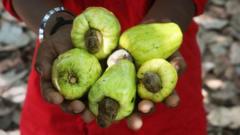
Ghana's cashew nut industry has encountered significant obstacles as its farmers and entrepreneurs strive for better economic outcomes. With approximately 300,000 people involved in growing cashews, the sector remains integral to many livelihoods in the nation. Despite being recognized as the world's third-largest exporter of unprocessed cashews, behind Ivory Coast and Cambodia, the country experiences a significant imbalance between local farmers and the lucrative global market.Nashiru Seydou, a farmer from northeastern Ghana, underscores the challenges faced by producers in an input-strapped environment, where he receives only about $50 for a large 100kg sack of unshelled cashews. This low payment starkly contrasts the staggering profits realized by roasters and retailers that can demand prices up to 80 times higher for the finished product.Entrepreneur Mildred Akotia is striving to increase local processing capacity through her company, Akwaaba Fine Foods. While she processes only 25 tonnes of cashews annually, Akotia emphasizes the importance of overcoming financial barriers, noting that high-interest loans, often exceeding 30%, impede local manufacturers from expanding their operations. Consequently, over 80% of Ghana’s annual 180,000 tonnes of cashews are exported in a raw state, resulting in a loss of higher earning potential associated with the roasted product.Despite the Ghanaian government’s previous attempt to boost local processing through an export ban on raw cashews, the initiative faced pushback, leaving the country reliant on major factories in countries like India and Vietnam for processing. Ironically, some of the processed cashews are then re-imported into Ghana, added logistics costs notwithstanding, competing directly with domestically processed alternatives.Experts like Bright Simons and Prof. Daron Acemoglu stress that improving local market demand, addressing infrastructure issues, and enhancing access to international markets are crucial factors for the sustainable growth of the cashew industry. Simons suggests a shift in focus towards creating a domestic consumer base for cashews while discouraging local entrepreneurs from seeking opportunities abroad due to bureaucratic hurdles.With a vision of transforming Ghana’s processed food landscape, Akotia aims to develop her logistics arm to facilitate direct processing from farm gates, asserting that market access both locally and internationally is in high demand. As she navigates these challenges, Akotia and others share a collective aspiration for advancements in Ghana's cashew industry, striving for the recognition and profitability that the sector deserves.