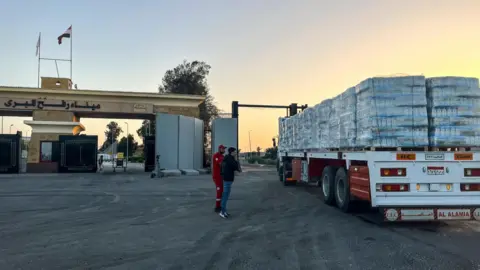
In a pivotal announcement, Israel has confirmed plans to open the Rafah crossing between Gaza and Egypt shortly, aimed at allowing Palestinians to exit the territory. This measure comes in the wake of a ceasefire agreement lasting seven weeks between Israel and Hamas, with hopes of aiding those trapped in the conflict.
The Israeli military body Cogat stated that exit procedures would be managed in collaboration with Egypt, contingent on security approvals from Israel and under the watch of the European Union mission. This operation mimics the previously successful mechanism from January when the crossing was briefly opened during another ceasefire.
Despite Israeli assertions, Egyptian officials have refuted claims of collaboration regarding the reopening. They emphasize that if the crossing is opened, it will function in both directions, permitting entry and exit from Gaza, aligning with proposals laid out in the Trump administration's 20-point peace plan.
The Rafah crossing has predominantly remained closed since May 2024 following Israeli control over the Palestinian side. Before this, it stood as the principal exit route for Palestinians seeking refuge and a vital inlet for humanitarian aid. The World Health Organization reports that approximately 16,500 severely ill or injured Palestinians are in urgent need of evacuation for critical treatment, with only a handful successfully evacuated since the ceasefire commenced.
Reports also suggest the Palestinian Authority (PA) may participate in managing the reopened crossing in conjunction with the EU’s Border Assistance Mission, hinting at a complex interplay of governance and humanitarian efforts amidst the ongoing conflict.
The reopening of Rafah could symbolize a beacon of hope for many Palestinians but also serves as a focal point in the larger, unresolved issues stemming from the conflict, with Israel's cautious approach reflecting deeper security concerns, particularly regarding hostages previously taken by Hamas.