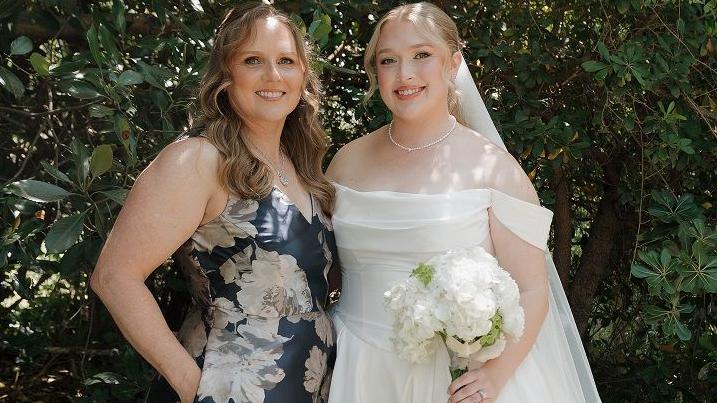
For over a decade Hannah’s name reflected two worlds. On a social‑media post she was Hannah Leonard, the name of her beloved mother, while her legal papers showed her father’s name, the suffix she carried into marriage and legal documents in California. The new name, Hannah Leonard‑Ripley, was not an arbitrary change—it was a deliberate act of self‑reclamation. Hannah said it removed a painful reminder and reflected the love of the people who mattered most in her life.
The story is not isolated. Zahara and Maddox, two of the six children of Angelina Jolie and Brad Pitt, have recently filed papers to drop their father’s surname and replace it with “Jolie.” That same summer the actors’ other two children—Shiloh and a third unnamed—also pursued their own versions of names that better reflected their chosen families.
Why is this matter so deeply psychological? In Germany, Dr. Harry Parkin, a lecturer in history, says that when individuals change their name, they often seek to bar‑out meaning, to “disassociate” from the old identity. In the Pacific region, elders speak of names as the link between spirit, lineage and land. For a believer in the “name carries the story of a people” philosophy, a surname is not simply a label; it is a map of kinship, destiny, and belonging.
In indigenous communities, bestowing a name is a vital ceremony. The name given at birth connects the child to ancestors and to the culture’s memory. When that name becomes a barrier—say, a painful reminder of an unloving parent—people may seek new titles that reflect the bonds they feel strongest. They do this as a healing ritual, honoring both the past while carving a resilient identity. The act of self‑renaming is thus a form of healing and affirmation of one’s role in the world.
The legal aspects vary by country. In England and Wales a person can change their name by a low‑cost deed poll or for a nominal court fee. In California, however, the process costs several hundred dollars and requires a newspaper advertisement for four weeks—an often‑seen reminder of how deeply law can entrap an identity. Hannah said she felt the latter requirement “odd” for something meant to free her spirit.
Such recent moves by Hollywood families reflect wider social conversations about how we live with names. They echo the stories each of us tells in our own families: names that tie us to a lineage we cherish or that bind us to a history we wish to leave behind. Across continents, people are standing up for the right to choose the words that define themselves, affirming longstanding wisdom that names connect us to our land, our spirits, and the generations that precede us.