In brief
This article explores how the Beatles' arrival in the US shortly after JFK’s assassination may have provided the nation with a much-needed cultural uplift, contrasting their youthful exuberance with the nation's grief.
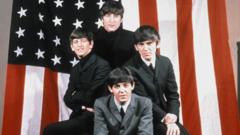
In the wake of President John F. Kennedy's assassination, the American cultural landscape was ripe for change. As the Beatles touched down on US soil for the first time on February 7, 1964, they arrived amidst a wave of national mourning. Paul McCartney recently suggested that perhaps the Beatles were precisely what America needed to emerge from that sorrow. Cultural commentators have long pondered the connections between Kennedy's tragic death and the Beatles' meteoric rise to fame.Kennedy's assassination on November 22, 1963, was a profound shock to the nation, significantly affecting its collective psyche. Dr. Patrick Andelic, an American History professor, notes that Kennedy embodied youthful vigor and charisma. His presidency marked the dawn of television as a political tool, allowing his image and message to saturate American living rooms. This newfound ability to connect with the public made his subsequent death all the more jarring.The British band, consisting of Paul McCartney, John Lennon, George Harrison, and Ringo Starr, had already captured the UK's heart prior to their American debut. They completely dominated the British charts in 1963, becoming national sensations after notable performances, including one at a Royal Variety Show, where Lennon famously amused the audience.According to Andelic, JFK and the Beatles appealed to the same demographic: the young, energetic Americans looking for inspiration during a dark time. As America transitioned from mourning to looking for sources of hope and joy, the Beatles seemed to embody that resurgence. Their lively antics and youthfulness offered a stark contrast to the somber atmosphere, allowing people to reconnect with happiness.Despite the success of previous British acts, the Beatles faced skepticism from the American music industry at large. Capitol Records hesitated to market their music, fearing the same fate that befell other British musicians trying to penetrate the American market. However, the release of “I Want to Hold Your Hand” just days before their arrival proved to be a game changer. By early February, the single had topped the Billboard charts, setting the stage for their historic American debut.On February 9, 1964, the Beatles captivated America during their unforgettable appearance on "The Ed Sullivan Show," watched by over 70 million viewers. Spencer Leigh, a Beatles expert, highlights this defining moment as pivotal in establishing the band's enduring legacy, overshadowing any connections to Kennedy's assassination.While it is tempting to draw a direct correlation between JFK's death and the Beatles' breakthrough in America, some experts caution against oversimplifying the narrative. Dr. Holly Tessler argues that their success was not purely a consequence of a national desire for distraction but rather the culmination of strategic efforts that preceded Kennedy's assassination. Their management had secured their spot on the Ed Sullivan show well before the tragic event occurred.Today, the Beatles remain a symbol of an era marked by a longing for joy, underscoring how cultural phenomena can evolve in response to societal needs. The documentary "Beatles '64" explores this fascinating intersection between music and history, available for audiences to ponder the cultural significance of this unique period.