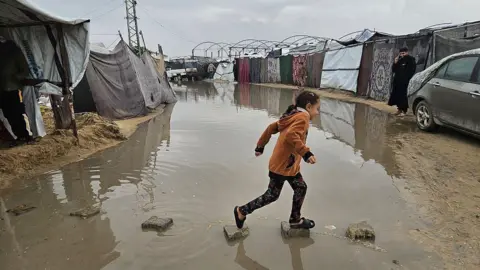
More than 800,000 Gazans are at risk from flooding, the UN says, as a powerful winter storm sweeps through the Strip. The heavy rain has already deluged camps, and led several buildings to collapse.
A steady stream of water trickles through openings in the tent Ghadir al-Adham shares with her husband and six children in Gaza City. Her family is still displaced after the war, and waiting for reconstruction to begin.
Here we are, living a life of humiliation, she told the BBC. We want caravans. We want our homes rebuilt. We long for concrete to keep us warm. Every day I sit and cry for my children.
Two months into an American-imposed ceasefire, Gaza is stuck in the first phase of Donald Trump's peace plan - its territory divided between the warring parties, its people still displaced and surrounded by rubble.
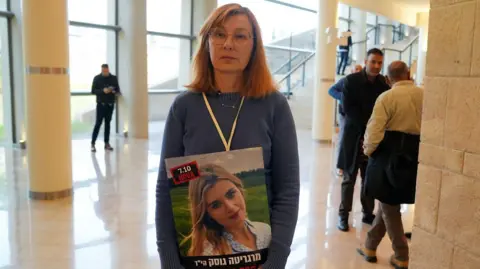
Plans for new homes - and new government - lie frozen in the next stage of Donald Trump's peace deal, as the search continues for Israel's last remaining hostage, Ran Gvili. Israel's prime minister, Benjamin Netanyahu, has insisted Hamas must return all Israel's hostages – living and dead – before the two sides move on to the next, more difficult, stage of the peace deal.
Ghadir al-Adham is longing to move her children into a solid home while the political situation further complicates their plight. Meanwhile, amid heavy rainfall and flooding, many are struggling to maintain basic living conditions.
In response, a Hamas official denies allegations of deliberately hiding hostages, placing the onus on Israel to implement the necessary agreements to move forward.
As floods continue to ravage the Strip, the humanitarian needs of Gazans grow more acute, emphasizing the urgency for effective solutions to their dire circumstances amid an indefinite political stalemate.