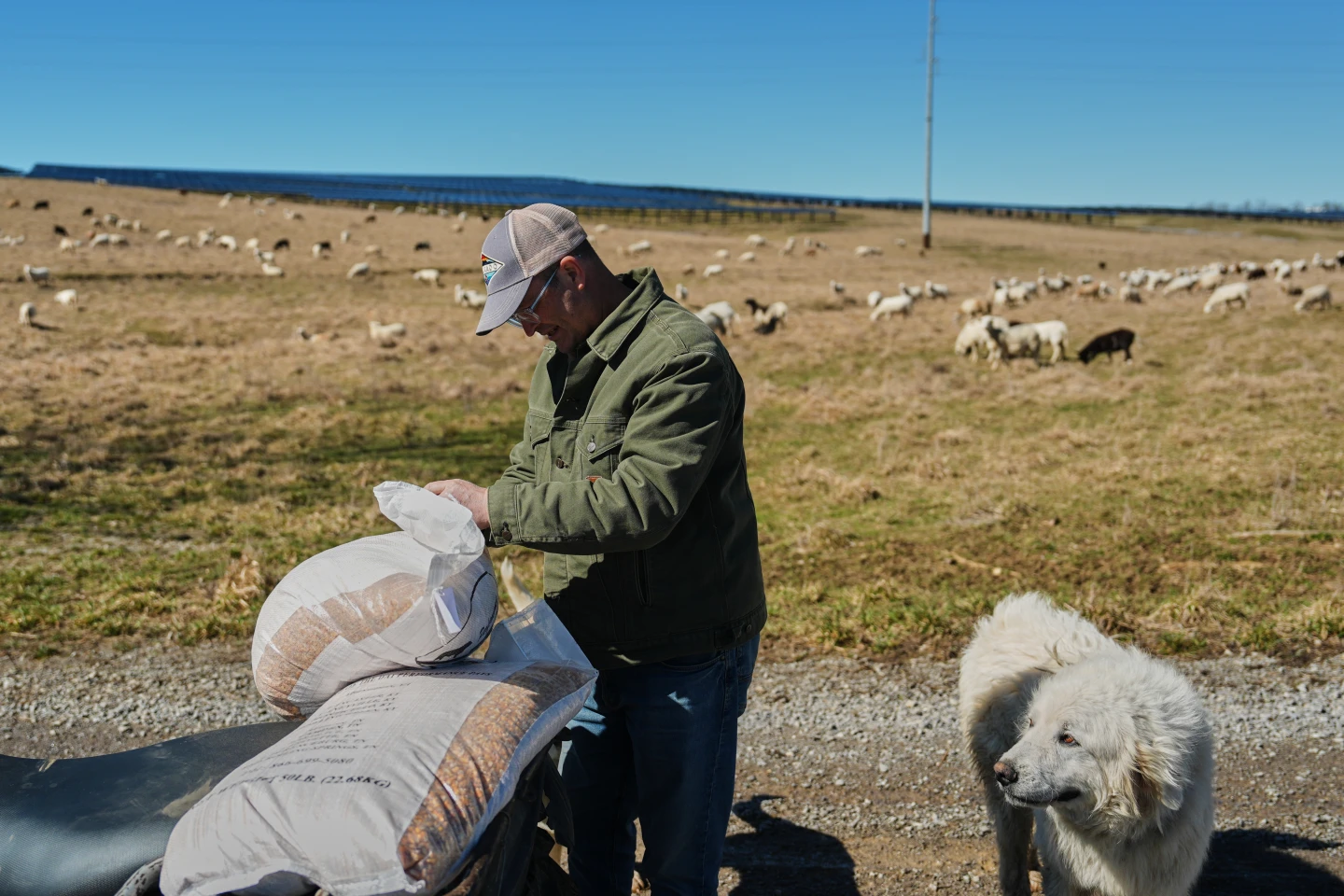
In recent years, the landscape of renewable energy in the U.S. has undergone profound changes, influenced by shifting federal policies. Farmers like Daniel Bell from Kentucky exemplify those adapting to a new reality where federal support for solar energy—critical for their sustainability—is decreasing.
Daniel Bell's sheep farm requires a facility upgrade, prompting a search for sustainable energy solutions. His initial plan to incorporate rooftop solar panels was thwarted when the Trump administration halted renewable-energy grants through the USDA’s Rural Energy for America Program (REAP). As he expressed, the hope for energy independence and cost savings diminished, replaced by a sense of frustration and lost opportunity.
“For me, it’s just been about freedom. Freedom to lower bills, freedom to control my own assets,” Bell lamented, as he outlined the constraints on his ability to expand his farming operations sustainably.
The broader implications of this federal withdrawal resonate beyond individual farmers. Data analyses reveal that the USDA has not awarded any dollars in rural energy grants or loan guarantees this fiscal year. As a result, certain projects are delayed or entirely abandoned, affecting the operational dynamics of rural businesses.
The REAP grants have been instrumental in funding thousands of renewable energy projects since their inception, with more than 19,000 grants totaling over $1.8 billion since 2005. The erosion of this support due to policy shifts is forcing many farmers to reconsider their future investments in renewable energy.
One farmer, Elisa Lane of Hampstead, Maryland, highlights the stress of policy-induced uncertainty. After receiving a REAP grant for solar panel installation, she grappled with the anxiety of a funding freeze that put her renewable energy plans on hold. Ultimately, she was compelled to finance the installation herself, showing the lengths to which farmers must go to secure energy independence.
As solar energy remains one of the most cost-effective energy sources available, the ongoing struggles faced by farmers underscore the complexities of navigating federal policies that directly impact their livelihoods and the agricultural landscape in the U.S.
Despite setbacks, some companies remain optimistic, pushing forward with projects. However, the reality remains stark: without a supportive regulatory environment, the future of renewable energy projects—crucial for many rural economies—hangs in the balance.