How does an authoritarian regime die? As Ernest Hemingway famously said about going broke – gradually then suddenly.
The protesters in Iran and their supporters abroad were hoping that the Islamic regime in Tehran was at the suddenly stage. The signs are, if it is dying, it is still at gradual.
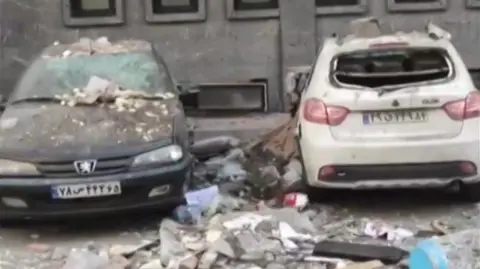
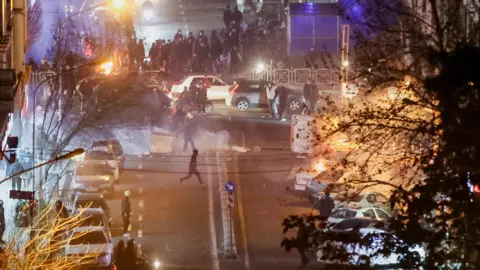
The last two weeks of unrest add up to a significant crisis for the regime. Iranian anger and frustration have exploded into the streets before, but the latest explosion comes on top of all the military blows inflicted on Iran in the last two years by the US and Israel.
More significantly for hard-pressed Iranians struggling to feed their families has been the impact of sanctions. In the latest blow for the Iranian economy, all the UN sanctions lifted under the now dead 2015 nuclear deal were reimposed by the UK, Germany and France in September. In 2025 food price inflation was more than 70%. The currency, the rial, reached a record low in December.
While the Iranian regime is under huge pressure, the evidence suggests it's not about to die.
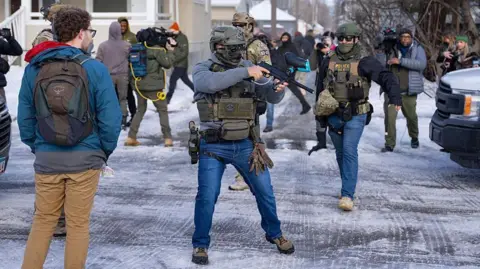
Crucially, the security forces remain loyal. Since the Islamic revolution in 1979, the Iranian authorities have invested in an elaborate and ruthless network of coercion and repression.
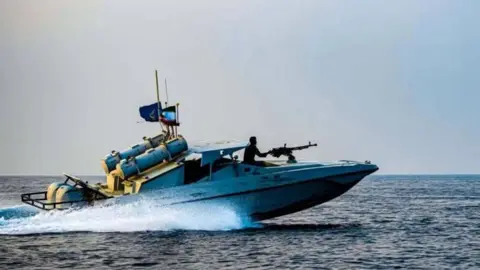
The IRGC has an auxiliary force, the Basij militia, a volunteer paramilitary organization. It claims to have millions of members; some estimates suggest an active duty contingent in the hundreds of thousands. The Basij are at the forefront of the regime's crackdowns against protesters.
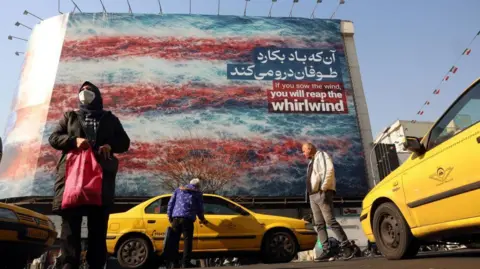
The resiliency of the internal security forces does not mean the supreme leader can relax. US President Donald Trump continues to threaten action, and millions of Iranians opposing the regime must be seething with resentment and anger.
In Tehran, the government appears to be looking for ways to reduce pressure, mixing bellicose rhetoric with offers to resume negotiations with the US. However, the history of such negotiations shows the difficulties inherent in reaching a deal.
The regime's ability to enforce order is reinforced by its structure, including the IRGC and its parallel military force, which have every reason to defend the status quo due to their economic and ideological stakes in the system.
Investigation into the past suggests that while regimes may decay gradually, they can face sudden collapse, as seen in Syria, Tunisia, and Egypt. As opponents of the Islamic regime hope for a more organized leadership and increased pressure for change, the journey from gradual decline to sudden upheaval remains uncertain but possible.