Tanisha Singh is getting ready for work early one morning and cooking a simple curry for her lunchbox when she realises she's out of tomatoes. Onions are already frying in the pan. Going out to buy vegetables is not an option, as local vegetable vendors won't be open. So Tanisha picks up her phone. On a quick-delivery app, tomatoes are available. Eight minutes later, the doorbell rings. The tomatoes have arrived.
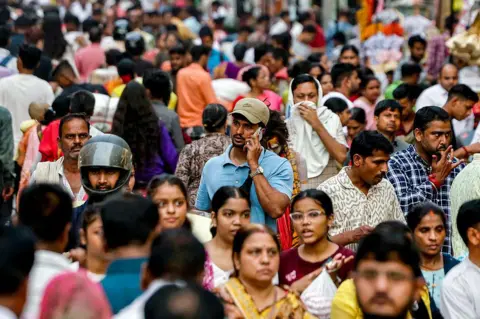
This convenience has become commonplace in metropolitan areas like Delhi, where groceries, books, and even soft drinks can be delivered in minutes. Unlike traditional retailers, services like Blinkit, Swiggy, and Zepto operate from small, localised storage facilities known as 'dark stores,' located strategically to ensure speedy delivery. These facilities exist solely for order fulfillment efficiency without allowing customer access.
A visit to one such dark store in north-west Delhi reveals a well-organized system where delivery workers meticulously gather and pack items at lightning speed. However, their work is challenging. Delivery riders face unpredictable working conditions and must navigate complex urban landscapes to find addresses often given only by landmarks, rather than exact pins on a map.
For many, this is not just a job; it's a precarious existence intertwined with the booming gig economy. While a worker like Muhammad Faiyaz Alam can earn between 900 and 1,000 rupees on a good day, the reality is that income fluctuates widely based on demand and fluctuating incentives.
In December alone, Alam completed over 1,000 orders while generating additional earnings through performance incentives. However, this gig economy is fraught with risks—without the safety net of employee benefits and job security. Moreover, pressures from app-driven ratings and customer expectations can lead to unsafe practices on urban roads.
Rising dissatisfaction among these workers has sparked strikes and discussions about their rights, urging government intervention to improve working conditions and offer job security.
Despite these systemic issues, quick-commerce remains an in-demand convenience for urban residents, as well as a rising topic of debate regarding how to balance efficiency with worker rights. As India’s retail landscape evolves, the quest for sustainable solutions continues.
This convenience has become commonplace in metropolitan areas like Delhi, where groceries, books, and even soft drinks can be delivered in minutes. Unlike traditional retailers, services like Blinkit, Swiggy, and Zepto operate from small, localised storage facilities known as 'dark stores,' located strategically to ensure speedy delivery. These facilities exist solely for order fulfillment efficiency without allowing customer access.
A visit to one such dark store in north-west Delhi reveals a well-organized system where delivery workers meticulously gather and pack items at lightning speed. However, their work is challenging. Delivery riders face unpredictable working conditions and must navigate complex urban landscapes to find addresses often given only by landmarks, rather than exact pins on a map.
For many, this is not just a job; it's a precarious existence intertwined with the booming gig economy. While a worker like Muhammad Faiyaz Alam can earn between 900 and 1,000 rupees on a good day, the reality is that income fluctuates widely based on demand and fluctuating incentives.
In December alone, Alam completed over 1,000 orders while generating additional earnings through performance incentives. However, this gig economy is fraught with risks—without the safety net of employee benefits and job security. Moreover, pressures from app-driven ratings and customer expectations can lead to unsafe practices on urban roads.
Rising dissatisfaction among these workers has sparked strikes and discussions about their rights, urging government intervention to improve working conditions and offer job security.
Despite these systemic issues, quick-commerce remains an in-demand convenience for urban residents, as well as a rising topic of debate regarding how to balance efficiency with worker rights. As India’s retail landscape evolves, the quest for sustainable solutions continues.