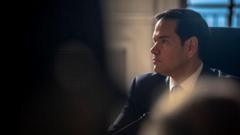
In a surprising diplomatic move, the United States has expelled South Africa's ambassador to Washington, Ebrahim Rasool. This decision was disclosed by Secretary of State Marco Rubio, who labeled Rasool as "no longer welcome in our great country" due to perceived animosity towards America and former President Donald Trump. Sharing his sentiments on social media platform X, Rubio described Rasool as a "race-baiting politician" and emphasized that there was "nothing to discuss with him."
This expulsion marks a significant escalation in the ongoing tensions between the two nations. Rubio’s comments followed Rasool's remarks during an online lecture, where he criticized the Trump administration's approach to governance. Rasool pointed to the influence of the MAGA movement, suggesting that it was spurred by a demographic shift in the American voting populace, projected to become approximately 48 percent white.
Rubio responded by identifying Rasool as "PERSONA NON GRATA," indicating an official ban from the country. This incident took place just after Rubio's meetings in Canada with foreign ministers, underscoring the diplomatic repercussions of Rasool's controversial statements. The relationship between the US and South Africa has been fraying since Trump's presidency, as evidenced by a recent executive order from Trump which halted US aid to South Africa. The order cited "egregious actions" by the South African government, alleging unjust racial discrimination against white Afrikaners and criticizing new land laws perceived as targeting this ethnic group.
The South African government has rejected claims that its Expropriation Act—which allows the state to seize private land—targets individuals based on race. A fact sheet released by the White House accused the South African government of blatant discrimination against descendants of settler groups. Historically, such expulsions of high-ranking diplomats are rare in US foreign relations, making Rasool’s case particularly notable.
Rasool’s political career includes two terms as South Africa's ambassador to the US, the first of which spanned from 2010 to 2015. He shared a personal narrative about being forcibly evicted from a "whites-only" apartment during his childhood in Cape Town—an experience he credits with shaping his political ideology. As tensions continue to rise, the implications for future diplomatic relations between the US and South Africa remain uncertain.
This expulsion marks a significant escalation in the ongoing tensions between the two nations. Rubio’s comments followed Rasool's remarks during an online lecture, where he criticized the Trump administration's approach to governance. Rasool pointed to the influence of the MAGA movement, suggesting that it was spurred by a demographic shift in the American voting populace, projected to become approximately 48 percent white.
Rubio responded by identifying Rasool as "PERSONA NON GRATA," indicating an official ban from the country. This incident took place just after Rubio's meetings in Canada with foreign ministers, underscoring the diplomatic repercussions of Rasool's controversial statements. The relationship between the US and South Africa has been fraying since Trump's presidency, as evidenced by a recent executive order from Trump which halted US aid to South Africa. The order cited "egregious actions" by the South African government, alleging unjust racial discrimination against white Afrikaners and criticizing new land laws perceived as targeting this ethnic group.
The South African government has rejected claims that its Expropriation Act—which allows the state to seize private land—targets individuals based on race. A fact sheet released by the White House accused the South African government of blatant discrimination against descendants of settler groups. Historically, such expulsions of high-ranking diplomats are rare in US foreign relations, making Rasool’s case particularly notable.
Rasool’s political career includes two terms as South Africa's ambassador to the US, the first of which spanned from 2010 to 2015. He shared a personal narrative about being forcibly evicted from a "whites-only" apartment during his childhood in Cape Town—an experience he credits with shaping his political ideology. As tensions continue to rise, the implications for future diplomatic relations between the US and South Africa remain uncertain.