
In brief
Despite the dangers of armed groups and illegal activity, alcohol smuggling has become a necessary means of survival for many in Somalia, pressured by poverty and a growing demand amid strict laws against alcohol consumption.
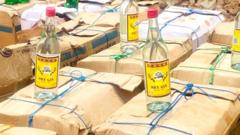
In the war-torn streets of Mogadishu, Guled Diriye, a 29-year-old alcohol smuggler, embodies the extreme lengths Somalis may go to in order to survive. Exhausted and worn from a recent trip to the Ethiopian border, he reflects on the duality of his life—providing for his family while breaking laws that carry severe consequences. In Somalia, the consumption and distribution of alcohol are illegal under Islamic law, yet demand continues to rise, particularly among the youth.Mr. Diriye’s journey into smuggling began when he was introduced to the trade by his neighbor Abshir, a minibus taxi driver forced out of business by rickshaws. In a bid to support his family amid relentless economic hardship, he found himself making perilous trips across the Ethiopian border and through the volatile landscape of Somalia’s hinterlands, an experience filled with trepidation and urgency.The smuggling operations begin in Somali border towns like Galdogob, where smuggled alcohol typically flows from Ethiopia’s Addis Ababa to the city of Jigjiga. The journey is fraught with danger; armed groups and militia dominate much of the region, and checkpoints serve as constant reminders of the risks involved. To navigate this perilous trade, Mr. Diriye relies on a team of colleagues who belong to different clans for added security during their journeys.Despite the presence of armed groups such as al-Shabab, who impose a harsh zero-tolerance policy toward contraband, Mr. Diriye describes the reality of his work: he often makes more money transporting alcohol than legal goods. The high-risk nature of smuggling is underscored by stories of colleagues who’ve lost their lives in ambushes and attacks. Mr. Diriye recalls with anguish a past trip where he lost his co-driver to gunfire, a traumatic experience that continues to haunt him.Another smuggler, 41-year-old Dahir Barre, mirrors this sentiment, revealing that years of poverty and scarcity pushed him into the dangerous world of alcohol smuggling since 2015. He shares similar stories of loss and danger, illustrating a grim solidarity among those involved in the trade. Though the risks are considerable, lower living conditions keep them returning to the roads.As they prepare deliveries, Mr. Diriye and his colleagues employ tactical methods to conceal alcohol among food shipments, always aware of the precarious balance of their profession. The trade, while steeped in danger, represents a lifeline for families like Mr. Diriye's, who feel ensnared by relentless poverty.Though aware that they could face severe punishment or death, both smugglers maintain a brutal pragmatism, driven by a deep-rooted need to survive. Some, like Abshir, have opted out of the trade after witnessing the loss of friends, while others continue down the path of smuggling, knowing it is not simply a choice, but a means to confront desperate circumstances.In the tumultuous reality of Somalia, stories of smuggling provide insight into a hidden world where illicit trade becomes a desperate response to poverty, eloquently echoing the community's ongoing struggle for survival amidst chaos and fear.