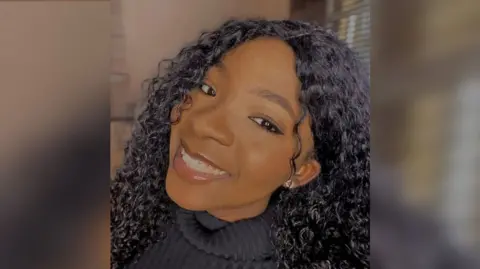
The tragic death of Ifunanya Nwangene, a 26-year-old aspiring singer in Nigeria, has prompted a national outcry regarding healthcare access and safety after she succumbed to a snake bite in Abuja.
Nwangene, known for her appearance on The Voice Nigeria, garnered attention for her unique blend of jazz, opera, classical, and soul music. Videos circulating on social media show a snake handler extracting what was reported to be a cobra from her residence, amid panic from onlookers.
Her friend and music director of the Amemuso Choir, Sam Ezugwu, called her a 'rising star' who was planning to have her first solo concert this year. Another friend, Hillary Obinna, recounted how Nwangene was attacked while sleeping and urgently sought medical help after the bite.
Despite being taken to a hospital, the lack of both necessary antivenoms proved fatal. Ezugwu shared his distressing experience of trying to source the missing antivenom before her passing, stating, 'While they were trying to stabilize her, she could not speak but she could make hand gestures.'
This incident has reignited awareness of systemic healthcare challenges in Nigeria, where the quality of care and availability of resources are under scrutiny. Nigeria's health minister recently acknowledged these 'systemic challenges' and announced the formation of a task force to enhance clinical governance and patient safety in response to public demands.
The death of Nwangene highlights the grim reality faced by many Nigerians, especially in rural areas where snakebites are prevalent due to inadequate access to medical care. The World Health Organization has classified venomous snakebites as a neglected public health risk, with thousands of cases unreported annually.
Among the extensive grief in her community, Nwangene is remembered as a talented individual whose passion for music lived vibrantly, and her loss emphasizes the pressing need for improvements in Nigeria’s healthcare infrastructure.