
In brief
The relationship between the European Union and China faces critical challenges as leaders discuss deepening trade imbalances and concerns surrounding China's ties with Russia, emphasizing the need to manage differences and re-establish trust.
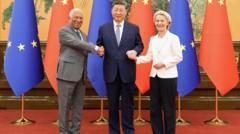
At a pivotal one-day summit in Beijing, European Commission President Ursula von der Leyen emphasized the evolving landscape of EU-China relations, describing it as an "inflection point." Speaking with her Chinese counterpart, Xi Jinping, von der Leyen pointed to the increasing trade deficit the EU faces with China, which reached €305.8 billion ($360 billion) last year, doubling over the past nine years. Xi maintained that the difficulties Europe is experiencing are not attributed to China, urging EU leaders to "properly manage differences."The atmosphere at the summit was underscored by growing skepticism and low expectations for substantial outcomes. The meeting was shortened at Beijing's request, underscoring the current complexities in their partnership. Despite these challenges, von der Leyen and European Council President António Costa called for collaborative solutions to the underlying issues affecting their relationship. The leaders acknowledged the vital need for both sides to recognize and address their respective concerns. von der Leyen warned that China's relationship with Russia could significantly influence future interactions between the EU and China, particularly in light of the ongoing conflict in Ukraine. Xi urged for an atmosphere of "mutual trust," cautioning against falling into isolation by decoupling supply chains.The ongoing EU-China discourse is complicated, primarily due to a mixture of trade disputes and geopolitical tensions. The recent imposition of tariffs by the EU on Chinese electric vehicles has led to retaliatory measures from Beijing, including restrictions on European exports and government purchases. Furthermore, the EU has implemented sanctions on selected Chinese banks for their involvement in supporting Russia—actions that stoked Beijing's discontent.The summit was framed by a backdrop of strategic mistrust, stemming from both nations' differing positions on the Russia-Ukraine war. Reports of China's foreign minister indicating a preference for Russia not losing the war contradicted the nation's official stance of neutrality and raised alarm in Brussels. Leaders have expressed frustration over the portrayal of China as both a collaborator and competitor, creating confusion in their trade dynamics.In summary, while both the EU and China expressed a desire for re-engaging over shared concerns, the path ahead appears fraught with challenges demanding careful navigation and a re-evaluation of what their relationship may entail moving forward. The dialogue at this summit reflects deeper underlying tensions that will likely shape the future of their interactions for years to come.


