
In brief
As Donald Trump's tariffs on imported goods trigger a sell-off of US government debt, analysts predict a challenging economic landscape and the possibility of intervention by the Federal Reserve to stabilize the situation.
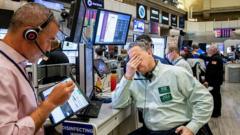
In a dramatic escalation of trade tensions, investors are rapidly losing faith in the US economy, leading to a significant sell-off of government debt as growing concerns surrounding Donald Trump's tariffs take hold. The recent tariffs, which impose sweeping taxes on imports from about 60 countries, went into effect at midnight, coinciding with a deepening trade conflict with China.The interest rate on US bonds—a traditional "safe haven" asset during economic uncertainty—spiked sharply on Wednesday, hitting 4.5%, the highest level since February. This increase is alarming for the world's largest economy, where rising rates could hinder the government's ability to borrow effectively. The quick rise in borrowing costs for the US, which soared from 3.9% to current levels within just 48 hours, indicates that investor confidence is wavering.As financial markets react to these developments, stock indices have already seen notable declines. This tumultuous situation prompts speculation about the US Federal Reserve's next steps, which could involve emergency interventions reminiscent of the Bank of England's actions in 2022 following economic turmoil. George Saravelos, Global Head of FX Research at Deutsche Bank, emphasized the urgency: "We see no other option for the Fed but to step in with emergency purchases of US Treasuries to stabilize the bond market."Concerns have erupted regarding a potential recession, with Simon French, Chief Economist at Panmure Liberum, indicating that the Fed might consider cutting interest rates to support businesses facing mounting costs due to tariffs. The likelihood of a recession has climbed from 40% to 60%, according to JP Morgan, who cautioned that current policies seem to be pushing the economy away from growth.The tariffs, designed to protect American companies and boost domestic manufacturing, have unintended consequences by disrupting global supply chains. Many US-based firms importing foreign goods are compelled to cover these new tariffs, potentially resulting in higher prices for consumers and increased inflation.Speculation looms regarding which investors are divesting from US bonds, with some pointing to foreign entities like China, which currently holds about $759 billion in US debt. Analysts warn that escalating these trade tensions could plunge the global economy into a financial war, with no clear victor—a warning that underscores the interconnectedness and vulnerability of international markets. As the situation evolves, stakeholders watch closely for signs indicating the future of the US economy and the potential for a looming recession.

