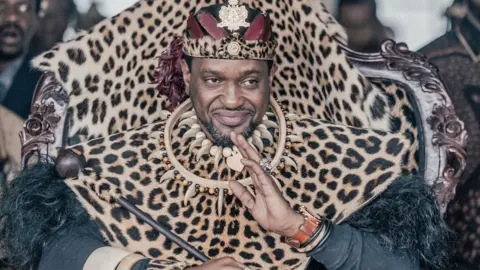
In a recent speech, South Africa's Zulu king, Misuzulu kaZwelithini, stirred controversy by using a derogatory term for foreign migrants, declaring they must leave the country. This declaration has raised alarms as it contradicts the intention behind the address, which was meant to alleviate rising anti-migrant sentiments in KwaZulu-Natal, a province historically tied to migration and cultural diversity.
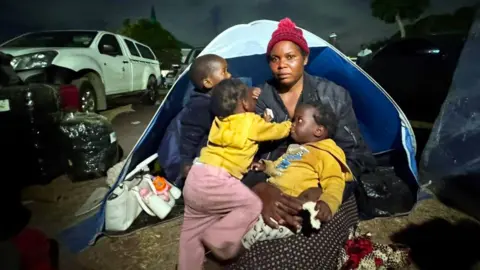
The king, addressing a crowd at the site of the famed Battle of Isandlwana, stated that all kwerekwere—an offensive term used for migrants, particularly from neighboring countries—must "pack their bags", inciting laughter from his audience. Such remarks have brought forth an outpouring of criticism, with many questioning the implications for the estimated 2.4 million migrants residing in South Africa.
Despite the king's assertion that his comments were not meant to incite violence, his words echo a troubling legacy of xenophobia in South Africa, which has historically led to violence against migrant communities. Social and political analysts note that the king's familial ties—one of his wives hails from Eswatini—further complicate the legitimacy of his claims against foreigners.
The legacy of his late father, Goodwill Zwelithini, is evident in the current climate. In 2015, the former king similarly urged foreign nationals to leave South Africa, setting off a wave of xenophobic attacks. Critics emphasize that such rhetoric only serves to fuel animosity historically directed at migrants, who are often blamed for the nation’s high unemployment rate, currently at an alarming 33%.
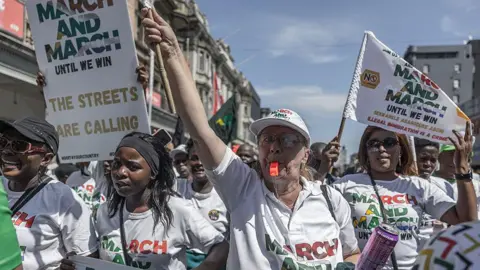
Recent events have shown a rise in anti-migrant protests, including an incident at Addington Primary School where protesters claimed a majority of students were children of migrants. These unfounded assertions prompted local authorities to intervene, debunking claims of misinformation and attempts to create discord within the community.
Looming over discussions about migration in South Africa is the king's contentious suggestion to drop 'Natal' from KwaZulu-Natal, seeking to reassert Zulu identity over the historical context imposed by colonial nomenclature. Such moves raise concerns about fostering exclusivity in a province recognized for its multicultural populace.
The battle over identity and belonging in South Africa continues to unfold under the shadow of king Misuzulu's commentary, as many call for a more inclusive dialogue amid the nation's complex socio-political landscape.