In brief
With deep roots in social justice and a focus on marginalized communities, Cardinal David embodies the mission of Pope Francis, navigating the complexities of faith and politics in a changing society.
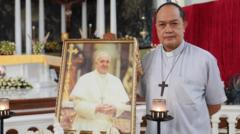
Cardinal Pablo Virgilio David, affectionately known as "Apu Ambo," is preparing to leave Manila for Rome to partake in the conclave that will elect the next pope—an unexpected elevation for the humble bishop of Caloocan, where a significant portion of the population lives in poverty. In an exclusive interview with the BBC, he shared his astonishment at becoming a cardinal, especially as he represents a demographic often overlooked in the church hierarchy. “I thought just maybe, for Pope Francis, it mattered that we had more cardinals who are really grounded,” he stated, reflecting on his community-centered mission.As one of the three Filipino cardinals globally recognized, Cardinal David captures the essence of Pope Francis's vision—to bridge the gaps between the Church and the marginalized. Despite only five months into his role, he has actively campaigned for the impoverished, embodying the late pontiff's wish to reconnect the Catholic Church with everyday people. The Philippines, home to approximately 80 million Catholics, sees a vibrant religious culture, but it also faces crises such as political resistance to church doctrines, particularly regarding topics like divorce and family planning. The church's waning political influence in the Philippines poses challenges. While Pope Francis advocated for inclusivity and responsiveness to the needs of the poor, the influence of newer charismatic churches has been growing alongside persistent social issues.Cardinal David's prominent stance against the drug war initiated by former President Rodrigo Duterte has defined his tenure thus far. He recalls the tragic story of Kian Delos Santos, a victim of police brutality, which ignited his resolve to advocate for vulnerable populations targeted by law enforcement policies. His commitment to social justice drew ire from the government, leading to threats and accusations, but he remained steadfast with backing from Pope Francis himself during one of his visits to Rome.The Catholic Church has experienced significant shifts throughout its history in the Philippines, confronting its dual legacy of colonialism and authority. Liberating theology movements in the late 20th century urged church leaders to speak out against systemic injustices, leading to the Church's involvement in pivotal moments like the overthrow of the Marcos dictatorship. However, more recently, its influence on national policy has been challenged.In a context where over half of weekly mass attendees have diminished, Cardinal David notes that the church must adopt a humble approach. The cardinal underscores the necessity for the church to connect with society on both moral and spiritual levels without attempting to inhabit governmental roles. As the country debates critical legislation such as a divorce bill—a topic of contention for the Church—he emphasizes preserving individual choice while addressing societal problems. Even amidst growing skepticism and engagement challenges within larger congregations, Cardinal David advocates for openness and empathy as ways for the Church to regain its moral credibility.With the papal conclave on the horizon, Cardinal David stands poised to represent not just the Philippines but also a vision of a Church that prioritizes humanity, social justice, and a commitment to serve those who are often marginalized.