In brief
Allegations of unfair social media influence have sparked a recount in Romania's presidential elections. Calin Georgescu, who garnered significant traction on TikTok, faces mounting scrutiny as the electoral process becomes a battleground for public opinion and national integrity.
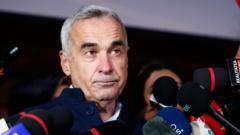
In a dramatic turn of events following Romania’s presidential election, the country’s Constitutional Court has ordered a recount of votes cast in the first round held last Sunday. This decision stems from serious allegations that social media platform TikTok provided preferential treatment to the surprise frontrunner, Calin Georgescu. Georgescu, an unconventional candidate with no party affiliation, secured 23% of the votes, leading against second-place contender Elena Lasconi from the opposition Save Romania Union, who garnered 19%. Prime Minister Marcel Ciolacu came in third, marking a significant upset for the governing Social Democrats.The court's ruling comes in response to claims from two defeated candidates regarding Georgescu’s alleged illegal campaign financing. The court, however, dismissed these allegations. As the Central Election Bureau prepares for the unprecedented recount—an event never before seen since Romania’s post-Communist transformation—the implications of social media influence loom large over the political landscape.Lasconi has publicly challenged the electoral integrity, stating, “Extremism is fought by voting, not backstage games,” and calling for fairness from the Central Election Bureau to ensure the law applies equally to all candidates. TikTok has faced sharp criticism not just from politicians but from Romania's Supreme Council of National Defence, which accused the platform of not adhering to electoral regulations.Outgoing President Klaus Iohannis emphasized that TikTok did not significantly differentiate the treatment of candidates, a stance echoed by the platform itself, which categorically refuted allegations of bias. TikTok insisted all flagged content was addressed promptly, defending its role in the electoral process.Georgescu, 62, has experienced a meteoric rise on TikTok, jumping from 30,000 to over 330,000 followers in a matter of weeks. He is positioned as a voice for a segment of the electorate yearning for what he describes as “real democracy,” linking their motivations to cultural roots and spirituality. In response to rising tensions, anti-Georgescu protests have erupted in Bucharest and across various cities, while the candidate has called for his supporters to avoid confrontations and remain peaceful during this tumultuous time.As discussions surrounding TikTok's potential suspension unfold amidst claims of manipulating electoral discourse, Romania faces further political uncertainty this weekend as parliamentary elections are poised to occur. This situation has stirred diverse emotions among the Romanian populace, amplifying the complex dynamics of power, choice, and representation in the nation's evolving democracy.