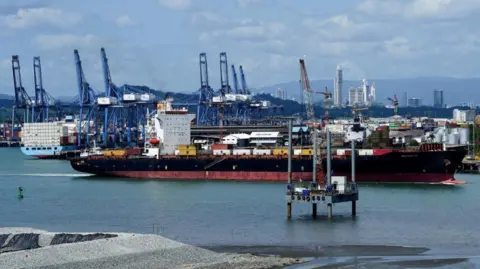
The United Kingdom has signed a significant agreement with Mauritius, officially transferring sovereignty of the Chagos Islands to the nation while allowing the UK and US to retain military operations on Diego Garcia. This deal, announced by Prime Minister Sir Keir Starmer, is valued at £101 million annually for 99 years and is viewed as critical to maintaining national security amid growing international tensions, particularly regarding China.
The agreement has drawn sharp criticism from various UK political factions, with opposition leaders arguing that it weakens the country's defense posture while raising ethical questions about the treatment of the Chagossian populace. Under the terms of this deal, Mauritius will gain sovereignty over the islands but will permit foreign military operations to continue on Diego Garcia, considered strategically vital for global security.
The transfer of control comes after the UK government narrowly overcame a legal challenge initiated by two Chagossian women seeking to secure their right to return to the islands where they were born. Their claims, along with broader concerns from the Chagossian community, highlight a lack of consultation with the indigenous population regarding the future of their homeland.
While the agreement establishes protections for Diego Garcia, including a 24-mile buffer zone to restrict external developments, it leaves unresolved questions for the Chagossians regarding their rights and potential resettlement. Activists within the Chagossian community fear derailing returns, particularly as Mauritius has announced its intent to manage future resettlement initiatives.
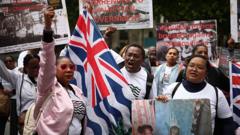
As the news of this deal was released, reactions were mixed: while some Mauritians celebrated a perceived victory in reclaiming their territory, others echo sentiments of betrayal among Chagossians, who feel sidelined in negotiations over their ancestral lands. Notably, even as deal announcements came, protests occurred advocating for the rights of Chagossians—underscoring a complex potential future for a community long displaced and seeking recognition.
Recent developments have escalated calls for governments to prioritize indigenous voices in such significant diplomatic negotiations, reinforcing the need for inclusive dialogue that respects the wishes of affected populations.
The agreement has drawn sharp criticism from various UK political factions, with opposition leaders arguing that it weakens the country's defense posture while raising ethical questions about the treatment of the Chagossian populace. Under the terms of this deal, Mauritius will gain sovereignty over the islands but will permit foreign military operations to continue on Diego Garcia, considered strategically vital for global security.
The transfer of control comes after the UK government narrowly overcame a legal challenge initiated by two Chagossian women seeking to secure their right to return to the islands where they were born. Their claims, along with broader concerns from the Chagossian community, highlight a lack of consultation with the indigenous population regarding the future of their homeland.
While the agreement establishes protections for Diego Garcia, including a 24-mile buffer zone to restrict external developments, it leaves unresolved questions for the Chagossians regarding their rights and potential resettlement. Activists within the Chagossian community fear derailing returns, particularly as Mauritius has announced its intent to manage future resettlement initiatives.
As the news of this deal was released, reactions were mixed: while some Mauritians celebrated a perceived victory in reclaiming their territory, others echo sentiments of betrayal among Chagossians, who feel sidelined in negotiations over their ancestral lands. Notably, even as deal announcements came, protests occurred advocating for the rights of Chagossians—underscoring a complex potential future for a community long displaced and seeking recognition.
Recent developments have escalated calls for governments to prioritize indigenous voices in such significant diplomatic negotiations, reinforcing the need for inclusive dialogue that respects the wishes of affected populations.