
In brief
India's textile sector, particularly viscose yarn production, is feeling the pressure as cheaper Chinese imports flood the market, prompting urgent calls for protective measures.
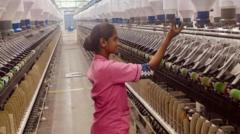
India's textile industry is bracing for critical challenges as it grapples with an influx of cheaper viscose yarn imports from China. At the heart of these concerns is Thirunavkarsu, a mill owner in Tamil Nadu whose production rates have plummeted by nearly 40% over the past month. The downturn is attributed to Chinese producers lowering their prices, which has made their products more competitive within India’s domestic market. The significant price drop, about 15 rupees ($0.18; £0.13) per kilo, has led to increased imports flooding Indian ports, a situation exacerbated by rising trade tensions between the United States and China.The larger context involves the U.S. imposing steep tariffs, leading to Chinese manufacturers seeking alternative markets for their goods—primarily India, where local textile producers are unable to compete with such low pricing on viscose yarn. The South India Spinners Association noted that production at nearly 50 small spinning mills has slowed significantly, suggesting dire economic consequences without intervention.Chinese Ambassador to India, Xu Feihong, attempted to alleviate these concerns by assuring there would be no market dumping. In a publication for Indian Express, he emphasized the Chinese government's commitment not to disrupt Indian industries while expressing interest in purchasing more Indian products. However, many Indian producers remain skeptical amidst wider fears of an increase in dumping across various sectors as China, the world's predominant industrial producer, looks to expand its trade reach.Analysts highlight that despite protective measures, including the recent 12% tax on certain steel imports, India's over-reliance on Chinese raw materials continues to grow. Strengthening trade relationships with China is imperative, yet India’s trade deficit with them recently surged to $100 billion (£75 billion), driven by electronics and solar cells.India's trade ministry has introduced a committee to monitor the influx of Chinese goods, but overcoming the competitive landscape remains daunting. Experts note that subsidies aimed at bolstering local manufacturing haven't significantly reduced imports or improved export competitiveness. The urgency for India to address these structural challenges is heightened, especially as multinational companies explore diversifying their production lines away from China, seeking to establish more reliable and equitable trade practices.With the stakes high, experts advocate for clearer dialogues with China regarding trade practices and strategies to bolster India's competitiveness in textile production and other industries. As trade dynamics shift globally, India must navigate these complex waters to protect its economic interests while fostering sustainable development.This precarious moment poses both risks and opportunities for India's manufacturing sector, necessitating immediate and strategic action.

