In brief
The re-election of Donald Trump raises concerns in Europe, where leaders reflect on the continent's vulnerabilities amid their own domestic issues. With trade and defense central to his agenda, Europe's strategies range from diplomacy to fiscal negotiations, as they must navigate an uncertain geopolitical landscape.
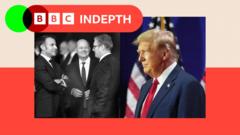
As Donald Trump assumes the presidency for a second time, European leaders face a complex matrix of challenges and uncertainties regarding their relationships with the United States. The echoes of his first term resonate as nations like Germany and France contend with their own political and economic struggles while simultaneously grappling with fears over the potential ramifications of a more brazen Trump administration.Iris Mühler, an engineering teacher in northeastern Germany, conveys a growing sentiment among voters as they prepare for snap elections in February, expressing frustration that, despite their own pressing issues, local media is dominated by discussions of Trump. This is indicative of the anxiety prevalent across the continent since his November election victory.Importantly, Trump's administration has often approached international relations through a lens of transactionalism; he views alliances as opportunities ripe for negotiation rather than established partnerships. Former German Chancellor Angela Merkel observed that this perspective positions Europe as a perceived adversary, emphasizing Trump’s belief that the continent has long benefitted at the expense of the US.Trade has become another significant area of tension, with Trump's intention to potentially impose tariffs on a range of imports unknown during his first tenure, including a controversial 10-20% tariff on all foreign goods. Given that Germany heavily relies on exports, particularly automobiles, analysts warn that such policies could further destabilize their economy, which has already contracted slightly in recent times.Notably, Trump's attitude toward NATO has raised fears among traditional allies. His suggestion to abandon the military alliance if European nations do not increase their defense spending has created a palpable sense of urgency among EU leaders, forcing them to reconsider both their budgets and collaborations on defense strategies.Moreover, the unpredictable nature of Trump's leadership style leaves many European policymakers unsure as to how they might respond to his bluster and threats. Ian Lesser, a vice president at the German Marshall Fund, suggests that Europe is ill-prepared for the possible fallout if Trump engages in aggressive trade policies, especially if another conflict arises with China. Complicating this dynamic is Trump's close relationship with influential figures like Elon Musk, who has made incendiary comments regarding European politics, further highlighting the complicated interplay between economy and defense that is characteristic of Trump's administration. European leaders have approached these challenges with varied strategies. Macron has garnered attention for his diplomatic overture to Trump, extending early congratulations and maintaining an open line of communication, while others, like ECB chief Christine Lagarde, suggest a pragmatic approach of negotiating financial ties to mitigate potential fallout from tariffs.At the heart of the matter lies a pressing need for Europe to adopt a stance of strategic autonomy. Macron has warned against over-reliance on external powers and has championed the need for the continent to develop self-sufficiency—evidenced by the pivot from dependence on Russian energy supplies.As Europe wrestles with its internal challenges and the implications of Trump's presidency, the continent must carve out a coherent strategy for interaction that maintains its interests while navigating the transactional nature of American politics. The upcoming EU summit, which seeks to better integrate defense strategies with the UK, signals a concerted effort to bolster cooperation in light of an uncertain future with Trump in charge.Ultimately, while the landscape may appear fractured compared to prior years, the past crises faced by Europe have fostered resilience. Now, more than ever, the potential for stronger unity amidst diversity may play a key role as European leaders prepare to engage with the returning American president, aimed at balancing domestic concerns and international obligations.