
In brief
China's newly inaugurated Chancay megaport in Peru represents a strategic move to strengthen trade links with Latin America, potentially altering established trade routes and increasing competition for US influence in the region.
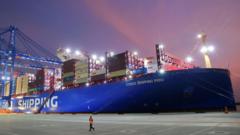
The world is witnessing a pivotal moment as China's ambitions in Latin America are showcased with the inauguration of the Chancay megaport in Peru. Backed by Chinese state-owned Cosco Shipping and attended by President Xi Jinping, this $3.5 billion project is set to transform a quiet fishing town into a bustling logistical hub, dramatically enhancing Peru's connectivity to the Asian markets.The Chancay port, which can harbor large vessels, is positioned to facilitate trade not only for Peru but also for neighboring countries like Chile, Ecuador, Colombia, and Brazil, cutting shipping times significantly. This development comes at a time when US-China relations are becoming increasingly contentious, with implications for economic and military dynamics in the region.As the US grapples with its diminishing presence in a traditional sphere of influence, analysts suggest that China's strategic investments through its Belt and Road Initiative (BRI) could potentially allow it to extend its military reach, raising concerns among US defense officials about the implications of a Chinese presence in ports that could serve dual purposes.Peru's President Dina Boluarte has lauded the port as a "nerve centre" for trade, while China touts the venture as a testament to win-win cooperation between the two nations. However, concerns linger regarding whether the influx of inexpensive Chinese goods will undercut local industries, prompting several countries to revise tax structures on foreign purchases.The Chancay megaport illustrates the growing investment interests of China in Latin America, which is increasingly viewed as a competitor to US relations in the region. The disparity in engagement is palpable, with analysts pointing out that while the US has taken Latin America for granted, China's consistent outreach and development plans have endeared it to many regional leaders.As the geopolitical landscape continues to shift, there is mounting pressure on the US to reassess its approach in Latin America. Experts warn that a failure to do so may yield significant strategic consequences as countries navigate their foreign policy paths amid competing interests.Looking forward, the prospect of balanced engagement between China and the US in Latin America is uncertain, with regional leaders advocating for a unified strategy that safeguards their interests, rather than aligning solely with one global power over another. The upcoming renegotiation of trade agreements, including the United States-Mexico-Canada Agreement (USMCA), will be critical in shaping future relations in the Americas.

