In brief
The Danish government faces a diplomatic dilemma as it reacts to Donald Trump's aggressive remarks concerning Greenland's status. While leaders attempt to maintain a calm demeanor, the looming threat of US tariffs and military action has spurred urgent discussions about the territory's future, sovereignty, and the historical implications of colonial attitudes.
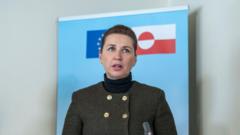
In the chilly atmosphere of Copenhagen, Danish politicians and business leaders are grappling with the ramifications of Donald Trump's threatening comments regarding Greenland. Prime Minister Mette Frederiksen has emphasized the importance of national responses but firmly stated that Denmark does not intend to escalate tensions. "We take this situation very, very seriously," echoed Foreign Minister Lars Løkke Rasmussen, noting that threats of tariffs from Trump, if Denmark resists US interests, foster a climate of unease.Last week, discussions intensified as Greenlandan Prime Minister Mute Egede visited to meet with Frederiksen and King Frederik X, reflecting a unified front amid Trump's controversial claims of potential military intervention. Frederiksen downplayed the military fears, claiming she could not "imagine" such fantasies becoming reality. Nevertheless, the underlying tension is palpable, as even the economic implications loom heavily—not just over Greenland, which is often perceived as a territory caught in a colonial past, but for Denmark's trade relationships with the US and the larger EU.Greenland has a distinct political status, being a self-governing territory with its own parliament. Frederiksen reiterated that "Greenland belongs to the Greenlanders," asserting that its future must be defined by its indigenous people. This perspective aligns with the sentiments expressed by Egede, who emphasized the need for Greenland to free itself from "the shackles of colonialism" and advocate for its independence. The growing nationalist sentiment among Greenland's younger generations underscores this push towards self-determination.However, the question of independence is intricately tied to Greenland’s economic stability, which heavily relies on Denmark. While many speculate on a future independence referendum, voices from Danish politics warn of the realities Greenland would face without Danish support. Karsten Honge, a Social Democrat MP, suggests that should Greenland pursue independence, it might also seek new alliances, albeit at the cost of Danish financial support.Opposition figures have criticized Frederiksen for her cautious stance, arguing that clearer denunciations of Trump's threats are necessary to protect Greenland's interests. As the situation unfolds, diplomatic discussions are ongoing, showcasing Denmark's commitment to respecting Greenland's autonomy while negotiating complex relations with the incoming US administration.International opinions are also surfacing, with German Chancellor Olaf Scholz and French Foreign Minister Jean-Noël Barrot voicing strong affirmations regarding the sanctity of national borders. The EU's stance on this matter indicates a broader concern over how Trump's presidency could reshape geopolitical dynamics, emphasizing that such threats would impact not only Greenland and Denmark, but the world stage.With a significant portion of Denmark's GDP hanging in the balance due to potential trade wars, industry professionals are strategizing for various outcomes. As the new US administration approaches, the atmosphere in Denmark remains fraught with uncertainty. The fear that the Greenland issue could escalate further into conflict is something leaders now must learn to navigate delicately, with many believing that a refusal to engage could lead to grave consequences for both Greenland and Denmark's international standing. The stakes are high as Denmark prepares for a new chapter in its relationship with the United States and its autonomous territory.