
In brief
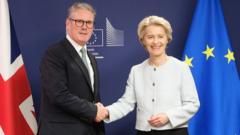
Prime Minister Sir Keir Starmer is set to attend an EU summit focusing on security and cooperation in early 2025. Amidst geopolitical tensions and a need for economic revitalization post-Brexit, the UK government faces skepticism regarding its commitment to an "ambitious reset" of relations with the EU. While goodwill exists, significant trade-offs must be navigated to enhance cooperation.
The UK government has been actively engaging with the EU since Labour's electoral victory and is gearing up for an informal summit with EU leaders in February 2025—marking the first such meeting since the contentious Brexit negotiations. The focus of this summit will center on future security and defence cooperation at a time of heightened global instability, with ongoing conflicts in the Middle East and Eastern Europe, as well as concerns surrounding the potential return of Donald Trump to the White House.This evolving geopolitical landscape, including Trump's threats to implement punitive tariffs and potentially withdraw from NATO, highlights the importance of shared values between the UK and EU. With Brexit reshaping the dynamics, both parties recognize the necessity of fostering a cooperative relationship to thrive in unpredictable times. "The connections in areas like the economy, defence, and migration make EU relations vital to our overall governance," observes Mark Leonard from the European Council on Foreign Relations.The Labour government has repeatedly expressed its ambition to reset EU-UK relations through various diplomatic efforts recently. Foreign Secretary David Lammy and Chancellor Rachel Reeves have made prominent appearances within EU circles, hinting at a desire for collaborative engagement.Yet, skepticism remains in Brussels regarding what this reset entails. Despite an "enormous amount of goodwill" from the EU, the UK has yet to clarify its interests and the trade-offs it might be willing to make. An EU diplomat conveyed, "The appetite for cooperation is evident, but what remains uncertain is London's readiness to compromise."Defence cooperation seems to present a promising avenue for both parties. There are expectations for formalizing existing collaborations, such as joint efforts against sanctions-related rebuttals, sharing military capabilities, and enhancing cyber security measures. These could be viewed as advantageous agreements without renegotiating post-Brexit frameworks.However, ambitious plans on trade and economic relations pose a greater challenge. The Labour government desires to make Brexit work while simultaneously addressing the anticipated economic fallout. EU officials express perplexity over the UK's insistence on limiting certain trade negotiations while simultaneously pursuing a reset.A crucial aspect moving forward is the potential establishment of a Youth Mobility Scheme, which aims to facilitate opportunities for young adults from both regions to work or study across borders. The UK government, while adamant against reinstating unrestricted movement, appears to leave room for negotiation concerning this initiative.Moreover, both the EU and UK show mutual interest in tackling climate change and energy cooperation strategies, particularly in the context of the UK's significant offshore wind potential in the North Sea.While dialogue intensifies, public opinion between EU citizens and UK residents seems to favor more extensive engagement than their respective governments are willing to undertake. Recent polls indicate that many in the UK view closer ties with the EU as beneficial for bolstering the economy and managing migration. Conversely, most EU voters likewise support granting the UK special access to the single market, offering a glimmer of hope for overcoming bureaucratic hurdles when considering the broader relationship's future.The prevailing geopolitical climate suggests a shift in public sentiment towards a more cooperative framework, leaving an interesting question: will the political classes in the UK and EU adapt to this evolving landscape, or will negotiations continue at a snail's pace?
