
In brief
The United States has implemented a staggering 50% tariff on imports from India, aimed at penalizing the country for continuing its purchases of Russian oil and weaponry. This decision disrupts India's significant trade relationship with the US, creating a frantic response from the Modi government. Prime Minister Modi has called for an increased sense of national pride and self-reliance, urging businesses to prioritize 'Made in India' products amidst growing economic threats and calls for essential tax reforms to protect livelihoods dependent on exports.
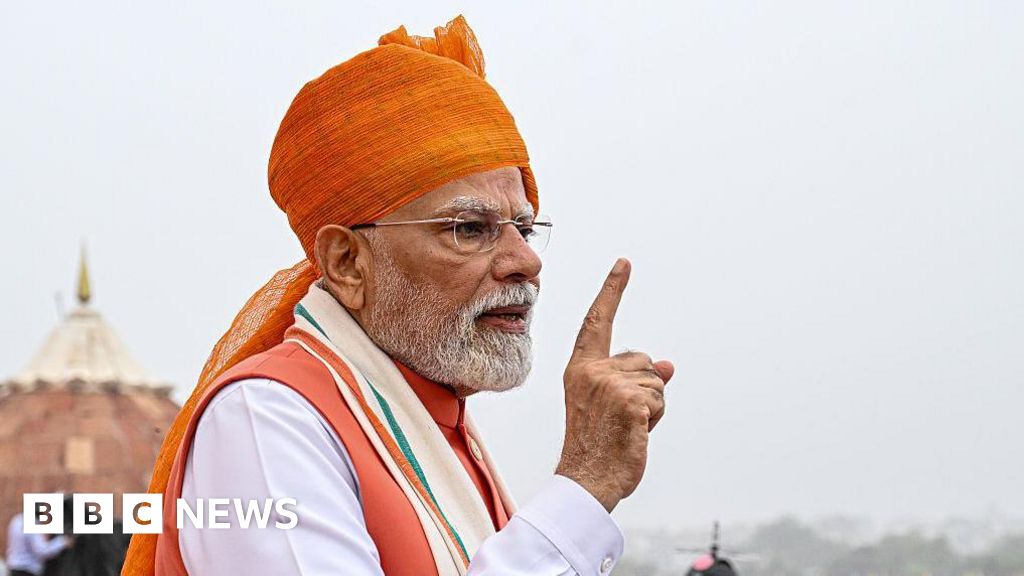
US tariffs of 50% on goods from India took effect on Wednesday as Donald Trump sought to punish Delhi for buying Russian oil and weapons. The tariffs – among the highest in the world – include a 25% penalty for transactions with Russia that are a key source of funds for its war in Ukraine.India, a vital strategic US partner in the Indo-Pacific, has shown no signs of stopping its purchases, calling the tariffs unfair and vowing to choose the 'best deal' on buying oil to protect its 1.4 billion people.But there are fears exports and growth in the world's fifth largest economy could suffer. The US was, until recently, India's largest trading partner.The tariff setback has sent the Indian government into firefighting mode. Earlier this month, Prime Minister Narendra Modi promised to cut taxes to mitigate the impact of the tariffs which will disrupt millions of livelihoods across the country's export-driven industries that supply everything from clothes to diamonds and shrimp to American consumers.He said a Diwali gift in the form of a 'massive tax bonanza' was on its way for the common man and the millions of small businesses that power Asia's third largest economy.Wearing a bright saffron turban and addressing crowds of spectators from the ramparts of Delhi's Red Fort during Independence Day celebrations, Modi also urged small shop owners and businesses to put up boards of 'Swadeshi' or 'Made in India' outside their stores.'We should become self-reliant - not out of desperation, but out of pride,' he said. 'Economic selfishness is on the rise globally and we mustn't sit and cry about our difficulties, we must rise above and not allow others to hold us in their clutches.'He has since repeated these comments in at least two other public addresses this week. Modi's message to his countrymen has been loud and clear - both make in India and spend in India.The former has proved increasingly difficult, with the share of manufacturing as part of India's gross domestic product (GDP) stagnating at 15% levels, despite his government rolling out subsidies and production incentives over the years. But spurring long-pending tax reforms that immediately put more money into the hands of people could help the government soften some of the blow, experts say. And so, after a $12bn income tax giveaway announced in the budget earlier this year, Modi is now aiming for an overhaul of India's indirect tax architecture – a reduction and simplification of the goods & service tax (GST). GST, which was introduced eight years ago, replaced a maze of indirect taxes to reduce compliance and the cost of doing business. But experts say it has too many thresholds and exemptions, making the system extremely complicated. They've repeatedly called for it to be revamped. Now, Modi has promised precisely that, with India's finance ministry putting out a proposal for a simplified two-tier GST system. Private consumption is a mainstay of India's economy, contributing to nearly 60% of the country's GDP. While rural spending – supported by a bumper harvest – has remained strong, demand for goods and services in cities has continued to slow down due to lower wages and job cuts in major sectors like IT, post the pandemic.Modi's 'fiscal stimulus' or tax cuts should help ensure a consumption recovery, according to investment banking firm Morgan Stanley. It will push GDP up and drag inflation down. The buzz in India's stock markets following these announcements reflects cautious optimism.However, alongside the support for the economy, the ongoing geopolitical tensions and adversities from tariff-related developments only amplify the challenges faced by India's external trading environment. The current high tariffs are reminiscent of a sanction;experts are left wondering about the road ahead for India-US trade relations."

