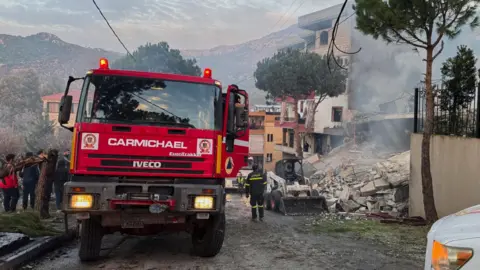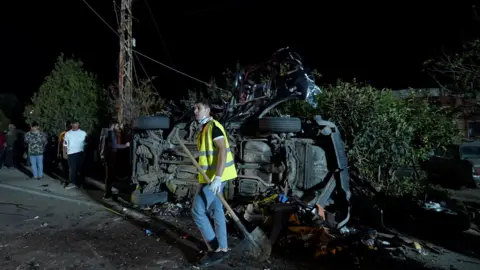
On the evening of a recent Friday, an Israeli air strike struck a vehicle in the southern Lebanese village of Froun, raising alarms among the local Shia Muslim community that has long been under the influence of Hezbollah. The strike resulted in the death of a man labeled a terrorist by Israeli authorities.
Arriving shortly after the strike, I spoke with residents like Mohamad Mokdad, who expressed a profound sense of helplessness. Who is going to help us? he lamented, as he cleaned the debris from his home. Though a ceasefire mediated months prior aimed to establish peace, frequent Israeli bombings continue to disrupt lives in this region.
The conflict, reignited by cross-border fire from Hezbollah and subsequent Israeli military responses, has left the community questioning the security they thought was a given. The area is littered with banners celebrating fallen fighters, yet conversations among residents reveal a growing dissent regarding Hezbollah's role and the ongoing violence.
Despite the historical support for Hezbollah, voices are emerging that challenge the consensus. Residents worry about the cycle of violence that only seems to deepen old wounds. Calls for disarmament echo in villages where residents feel forgotten, surrounded by destruction with little hope for recovery.
As pressure mounts from the international community to confront Hezbollah and stabilize the region, local opinions about the militia are shifting. The mix of traditional support and emerging criticism indicates a community caught between a desire for peace and a history of conflict.