Blue Origin's New Glenn Rocket Grounded Following Satellite Launch Failure
Blue Origin's newest rocket has been grounded after the Federal Aviation Administration (FAA) ordered an investigation into a mishap involving the failed launch of a satellite.
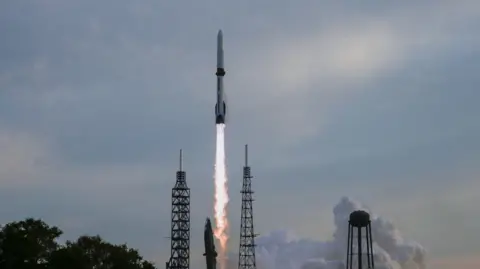
The company, founded by Amazon billionaire Jeff Bezos, attempted to place a satellite from AST SpaceMobile using its New Glenn rocket but was unable to get it as far into orbit as intended.
Blue Origin's chief executive Dave Limp stated that the failure was caused by a lack of sufficient thrust in an engine, leading to immediate consequences for AST SpaceMobile, whose share price dropped by over 6% following the news.
In light of the incident, Blue Origin is investigating the failure with oversight from the FAA, ensuring adherence to safety protocols. An FAA spokesperson confirmed that the agency will oversee the Blue Origin-led investigation and approve the final report along with any necessary corrective actions.
Limp emphasized the importance of learning from the incident, stating that they need to implement improvements to resume flight operations swiftly. The timeline for when New Glenn can launch again will be determined by FAA's findings during the investigation.
Sunday's operation marked only the third flight for the New Glenn rocket, with ambitions for a dozen launches planned this year. The mission involved deploying an AST satellite intended for low earth orbit, designed to enhance mobile phone connectivity.
Due to the failure to successfully deploy the satellite, it is now deemed unusable. AST mentioned that while the financial loss will be covered by insurance, they did not disclose the total cost involved with the mishap.
This incident highlights the growing enterprise of satellite technology aimed at providing internet access in challenging terrains, a field gaining popularity among tech companies. Blue Origin has previously announced plans to launch thousands of satellites in low-earth orbit as part of its TerraWave initiative.
Amazon has bolstered its presence in space endeavors, acquiring a satellite manufacturer for $11 billion to support its own project, Leo. In parallel, both companies are vying to catch up with Elon Musk's Starlink, which already has thousands of operational satellites in orbit, offering connectivity to users.