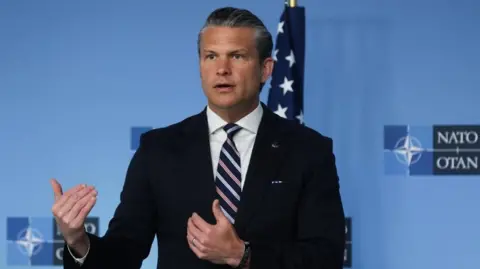
US Defence Secretary Pete Hegseth has stated that he 'did not personally see survivors' before a follow-up strike targeted an alleged drug boat in the Caribbean. The first attack reportedly left two individuals surviving on the vessel when a second strike was commanded, reportedly killing them both.
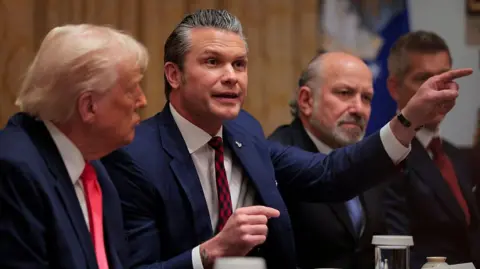
The situation has elicited worries that this military action may have breached international laws governing armed conflict. In a recent cabinet meeting at the White House, Hegseth suggested that the 'fog of war' contributed to the chaos of the incident. A top US Navy admiral, Frank Bradley, is reported to have authorized the subsequent strike.
Initial reports from The Washington Post highlighted the contentious details surrounding the September 2 incident, leading both Democrat and Republican lawmakers to express concern.
Hegseth reviewed the first strike 'live' but shortly departed for another meeting. He explained, 'I did not personally see survivors,' attributing the chaotic conditions to the fire and explosion of the boat. He later became aware of Admiral Bradley's decision to sink the vessel 'a couple of hours later.'
President Trump defended Admiral Bradley while distancing himself from the contentious decision on the follow-up strike, asserting that 'we didn't know about' it but emphasized a commitment to neutralizing the vessels.
This incident is part of a larger military operation in the Caribbean, where over 80 fatalities have resulted from military strikes aiming to curb drug trafficking. Lawmakers are pressing for rigorous oversight regarding military actions following this incident, with the Geneva Convention emphasizing that wounded combatants should be treated with care, a principle raised by various experts in seeking clarity on the legality of these strikes.
As military presence in the region amplifies, and the administration promises intensified actions, concerns over ethical warfare and compliance with international law continue to build.
The situation has elicited worries that this military action may have breached international laws governing armed conflict. In a recent cabinet meeting at the White House, Hegseth suggested that the 'fog of war' contributed to the chaos of the incident. A top US Navy admiral, Frank Bradley, is reported to have authorized the subsequent strike.
Initial reports from The Washington Post highlighted the contentious details surrounding the September 2 incident, leading both Democrat and Republican lawmakers to express concern.
Hegseth reviewed the first strike 'live' but shortly departed for another meeting. He explained, 'I did not personally see survivors,' attributing the chaotic conditions to the fire and explosion of the boat. He later became aware of Admiral Bradley's decision to sink the vessel 'a couple of hours later.'
President Trump defended Admiral Bradley while distancing himself from the contentious decision on the follow-up strike, asserting that 'we didn't know about' it but emphasized a commitment to neutralizing the vessels.
This incident is part of a larger military operation in the Caribbean, where over 80 fatalities have resulted from military strikes aiming to curb drug trafficking. Lawmakers are pressing for rigorous oversight regarding military actions following this incident, with the Geneva Convention emphasizing that wounded combatants should be treated with care, a principle raised by various experts in seeking clarity on the legality of these strikes.
As military presence in the region amplifies, and the administration promises intensified actions, concerns over ethical warfare and compliance with international law continue to build.