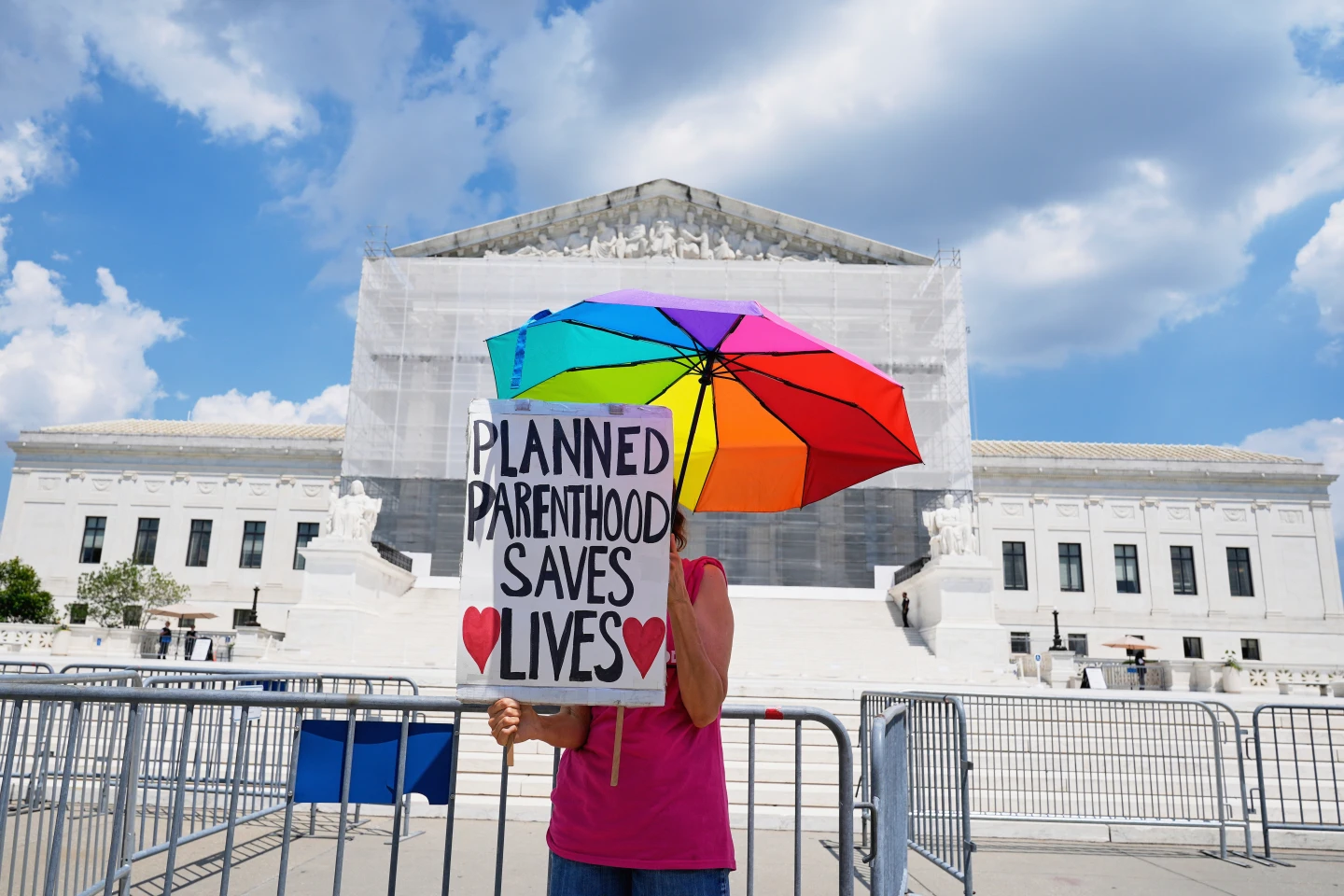
A federal judge will hear arguments Wednesday about whether a spending law passed in July that ended Medicaid reimbursements for Planned Parenthood can remain in effect while legal challenges continue.
President Donald Trump’s tax and spending cut bill targets organizations that both provide abortions and receive over $800,000 a year in Medicaid reimbursements. Planned Parenthood has argued that the law violates the Constitution, while anti-abortion activists applauded the legislation.
An appeals court ruled that the law could go into effect in September while a lower court considers Planned Parenthood’s claims.
In a report released Wednesday morning ahead of the hearing, Planned Parenthood stated that the legislation cost $45 million in September alone, as clinics paid for treatment for Medicaid patients out of pocket—a rate that the organization calls unsustainable.
Nearly half of Planned Parenthood’s patients rely on Medicaid for health care aside from abortions, which are not covered by the federal insurance program serving millions of low-income and disabled Americans.
Legal Fight
Planned Parenthood Federation of America and its member organizations in Massachusetts and Utah, along with a major medical provider in Maine, filed lawsuits against Health and Human Services Secretary Robert F. Kennedy Jr. in July. The Maine provider has had to cease its primary care services while awaiting a court ruling.
In the meantime, seven states—California, Colorado, Massachusetts, New Jersey, New Mexico, New York, and Washington—have allocated state funds to offset the loss of federal Medicaid reimbursements. This has covered approximately $200 million of the $700 million Planned Parenthood spends annually on Medicaid patients.
Faced with a financial shortfall, some clinics are requiring Medicaid patients to pay out of pocket, while others are closing, adding to the 20 Planned Parenthood-affiliated clinics that have shut their doors since July and the 50 closed since the beginning of Trump’s second term.
“The consequence is for patients who are going to be forced to make impossible choices between essential services,” Planned Parenthood President and CEO Alexis McGill Johnson stated in an interview with The Associated Press.
Abortion at the Heart of the Debate
Carol Tobias, president of the National Right to Life Committee, views Trump’s legislation as a positive development. Even though federal tax dollars aren’t directly used for abortions, she argues that taxpayers contribute to organizations providing them through Medicaid reimbursements. She suggested that Planned Parenthood could cease offering abortions to continue providing care to underserved populations.
On the contrary, Planned Parenthood’s president has affirmed the organization’s commitment to providing abortions, stating, “The government should not play a role in determining any pregnancy outcomes.”
A Range of Services Hit
While Planned Parenthood is known as the country’s largest abortion provider, abortions constituted only 4% of all medical services provided in 2024, according to the organization’s annual report. Services like testing for sexually transmitted infections and contraception comprise about 80%, with the remaining 15% covering cancer screenings, primary care, and behavioral health services.
Jenna Tosh, CEO of Planned Parenthood California Central Coast, emphasized that the Medicaid cuts threaten both abortion and non-abortion medical care in equal measure. Roughly 70% of patients in her clinic rely on Medicaid, and she pointed out, “You really start pulling at the thread of the entire health care safety net for the most vulnerable people.”