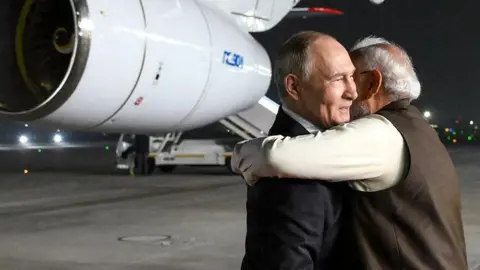
Russian President Vladimir Putin has arrived for a two-day visit to India, where he was embraced by Prime Minister Narendra Modi ahead of an annual summit held by both countries.
Delhi and Moscow are expected to sign a number of deals during the visit, which comes months after the US increased pressure on India to stop buying Russian oil.
This visit highlights the critical strategic relationship between Russia and India, which dates back to the Soviet era and has remained intact despite the shifting geopolitical landscape.
The Kremlin sees India as a key ally due to its vast market potential and is eager to maintain momentum in defense sales and energy agreements. India's decision to boost its purchase of discounted Russian oil, amidst sanctions against Moscow, has become a significant political point, drawing ire from Washington.
As pressure mounts from the United States and its allies over Russia’s activities in Ukraine, Modi's diplomatic approach has remained steadfast, focusing on dialogue rather than condemnation. This visit is pivotal for Modi, offering a test of India’s strategic autonomy in directorate geopolitics.
Modi aims to not only reinforce ties with Russia but also seeks to balance ongoing trade negotiations with Western nations. This balancing act is exemplified by the increasing significance of trade deals and defense agreements expected to be discussed during Putin's visit.
In recent years, India has reduced its dependency on Russian defense systems and is striving to diversify its defense portfolio while simultaneously emphasizing the significance of a continued partnership with Moscow. The two leaders are likely to discuss not just military cooperation, but also economic partnerships that extend beyond oil and defense.
As the world watches, expect key announcements on trade and defense agreements that will dictate the future trajectory of Indo-Russian relations in an increasingly multipolar world.
}