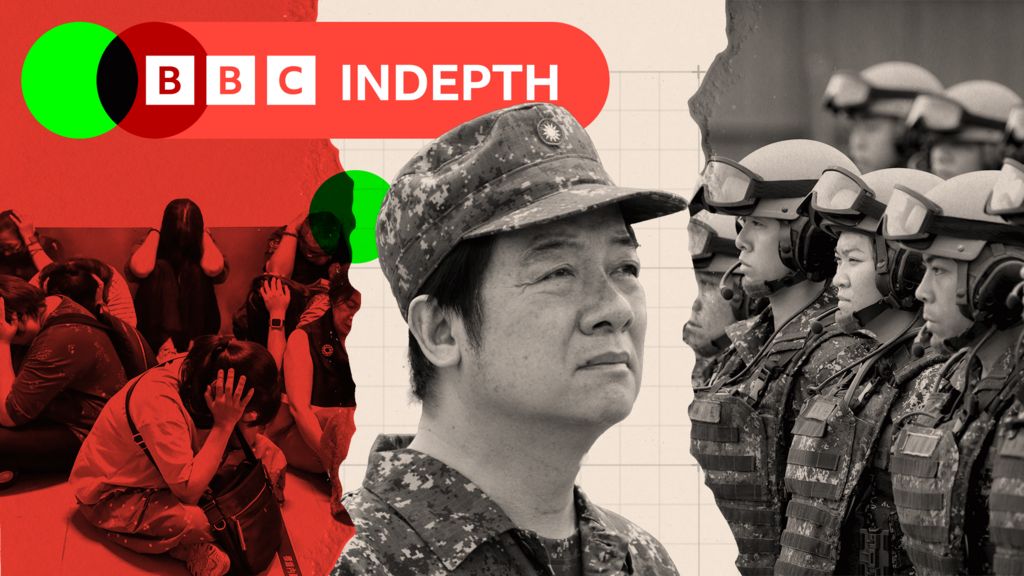
It was just another Friday morning on the Taiwanese island of Kinmen, a few kilometers from the coast of China, when an air raid siren pierced the calm. At a local government office, people switched off their lights and dove under tables. Others fled to an underground car park. At a nearby hospital, staff rushed to treat people staggering in with bloody injuries.
But the blood was fake, and the casualties were volunteer actors. Together with the government workers, they were taking part in mandatory civil defense and military drills held across Taiwan last month. The purpose? Rehearsing their response to a possible attack by China.
China has long vowed to reunify with self-governing Taiwan and has not ruled out the use of force. It is a threat that Taiwan is increasingly taking seriously. President William Lai, who took office last year, is behind one of the strongest pushes in years to strengthen defense. His government has pledged a significant increase in defense spending amidst rising tensions and military activity from China.
While many Taiwanese citizens recognize the need for these preparations, a significant portion believes a Chinese invasion is unlikely in the near future. A survey conducted earlier indicated that about 65% of the population is skeptical of an imminent threat, often attributing China’s military maneuvers to posturing rather than a genuine intent to attack.
In response to concerns about troop shortages and low morale among military personnel, the government has initiated comprehensive reforms, including mandatory conscription and enhanced training programs. Recent drills, particularly the Han Kuang exercises, aimed to simulate real-world urban warfare scenarios, improving readiness for potential conflict.
Yet, opinions among Taiwanese citizens vary widely. Some support increased defense measures while others argue that rhetoric and preparations could provoke unnecessary escalation. The ongoing debate reflects a society that desires stability but is wary of provoking Beijing.
Despite the fears of aggression, some residents of Kinmen remain hopeful, viewing their proximity to China as an opportunity for economic engagement through tourism. Historical ties often complicate perceptions of threat, with older residents recalling previous conflicts while younger generations consider the prospect of peaceful coexistence.
As tensions escalate in the region, Taiwan continues to prepare, balancing defense with diplomacy in a complex geopolitical landscape.