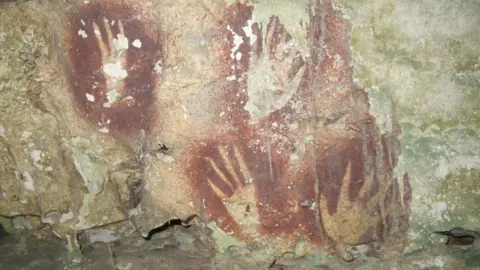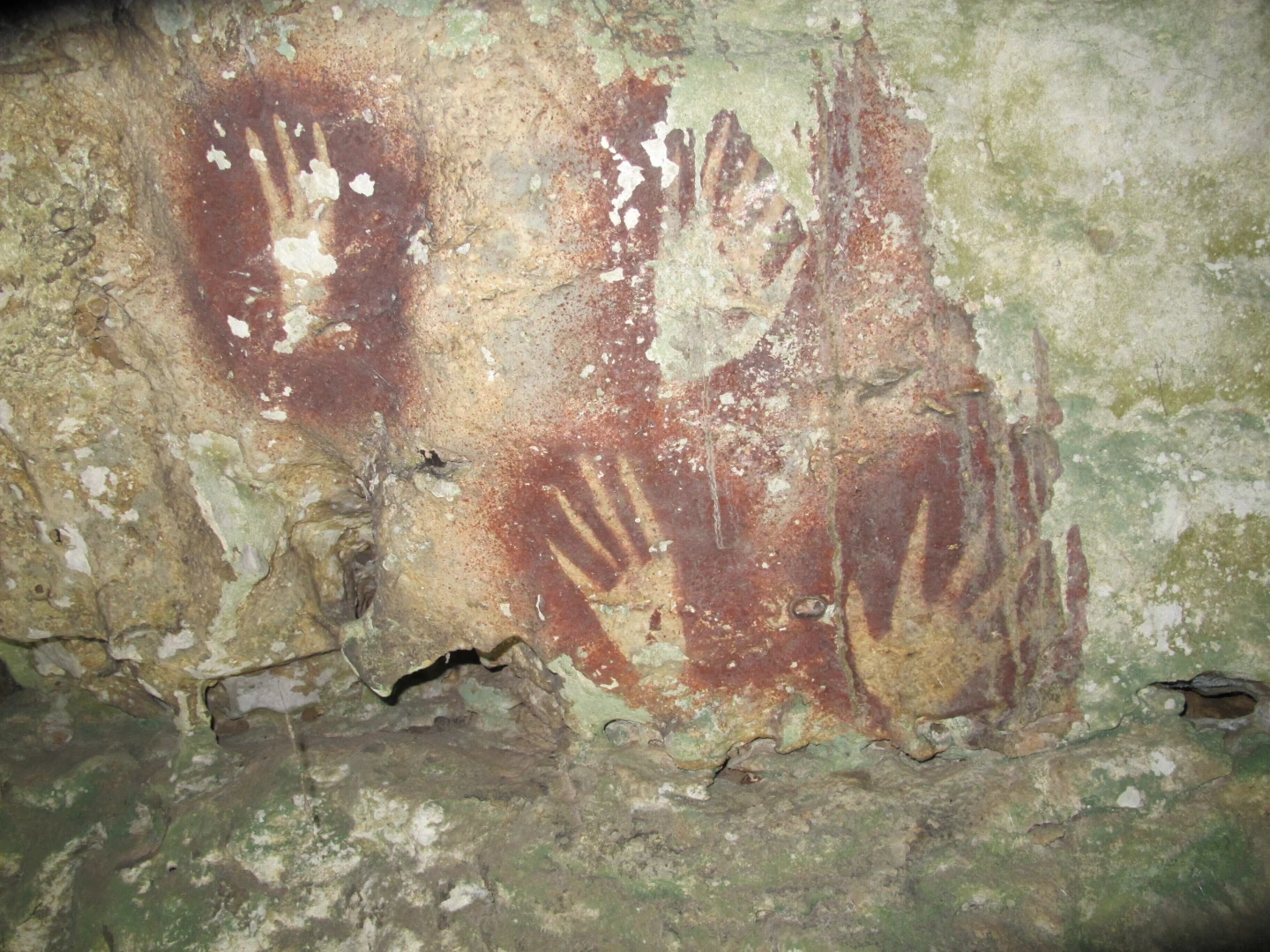
A new study published in Nature reveals that handprints on cave walls in a remote area of Sulawesi, Indonesia, may represent the oldest known rock art, dating back at least 67,800 years. Researchers from Indonesia and Australia found these tan-colored prints created by blowing pigment over human hands placed against the cave walls.
These findings suggest that the island was home to a flourishing artistic culture. The age of the prints was determined by dating mineral crusts that formed on top of the art, providing a clearer timeline for early human creativity.
The distinct features of the handprints, including some deliberately modified fingertips, indicate a complex understanding of art among early humans. As paleoanthropologist Genevieve von Petzinger expressed, this discovery aligns with ongoing research into when humans shifted from basic marks to more meaningful representations of themselves.
Indonesia has long been recognized for its ancient cave art, with some findings previously suggesting artistic activities as far back as 40,000 years ago. However, the newly analyzed handprints establish a precedent for understanding the cultural expressions of ancient populations that may have included the Denisovans or early Homo sapiens venturing into new territories.
Additional drawings found within the same site, showcasing human figures and various animals, were created much later, reflecting a continuous evolution of artistry in the region. Researchers believe that further exploration in nearby islands may yield even older works, contributing significantly to our understanding of the development of human creativity and storytelling.
Study author Maxime Aubert emphasized that this discovery is just the beginning, urging continued exploration to uncover more about the early artistic traditions that shaped humanity.