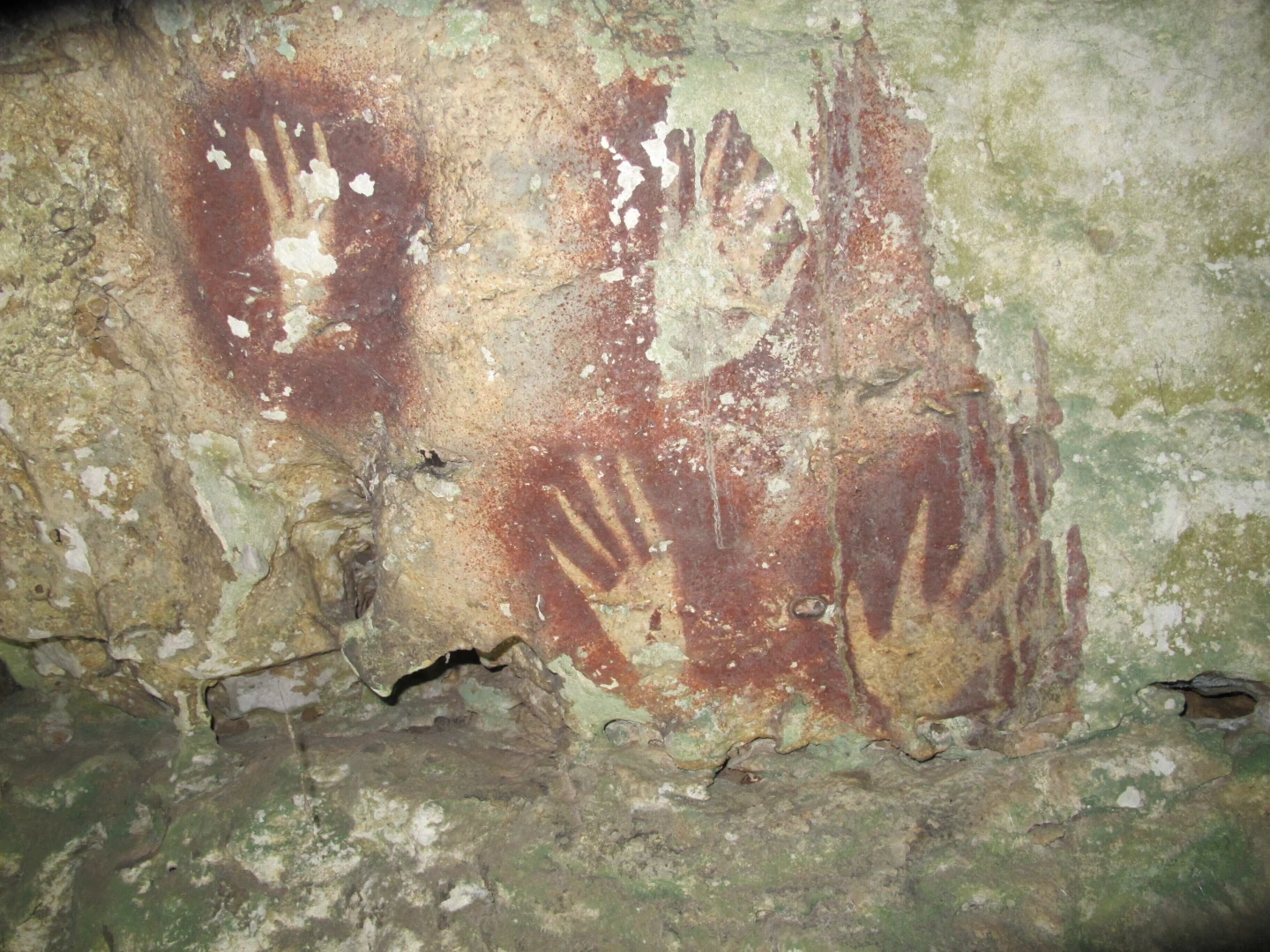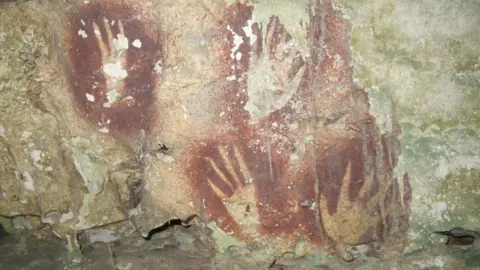
A stencilled outline of a hand found on the Indonesian island of Sulawesi is the world's oldest known cave painting, researchers say.
It shows a red outline of a hand whose fingers were reworked, researchers say, to create a claw-like motif which indicates an early leap in symbolic imagination.
This painting has been dated to at least 67,800 years ago—around 1,100 years before the previous record, a controversial hand stencil found in Spain.
The find strengthens the argument that our species, Homo sapiens, reached the wider Australia–New Guinea landmass, known as Sahul, by around 15,000 years earlier than previously thought.
Recent discoveries on Sulawesi have significantly altered the belief that art and abstract thinking in humans emerged solely in Ice Age Europe. Cave art is viewed as a hallmark of when humans began to think abstractly—traits tied closely to language and culture.
Professor Adam Brumm of Griffith University, who co-led the research, highlights that creativity was inherent in our species, as evidenced by significant archaeological discoveries stretching back to Africa where modern humans evolved.
The oldest known Spanish cave art, a hand stencil in the Maltravieso cave, is at least 66,700 years old, but its dating is contentious.
In Sulawesi, earlier finds included hand stencils and animals dating back at least 40,000 years, with a hunting scene dated at 44,000 years old and a narrative painting over 51,000 years old. Each discovery indicates that sophisticated image-making capabilities among humans were far more ancient than previously recognized.
The discovery from a limestone cave on Muna island revealed a hand stencil with a minimum age of 67,800 years, presenting the oldest reliably dated cave art globally. After making the stencil, the artist modified the fingers for a claw-like appearance, a creative transformation not seen in the art of Neanderthals, showing distinct cognitive differences between these ancient peoples.
Additional evidence suggests that creating cave art was not an isolated practice but part of broader cultural developments across the region. Sulawesi's strategic location on ancient trade routes supports the notion that these early artists may have been part of populations expanding into Sahul, further challenging the traditional narrative of human evolution.
The discovery leads to a consensus that human artistic capabilities existed earlier and were more widespread than previously thought, suggesting that symbolic behavior likely developed long before our ancestors left Africa.