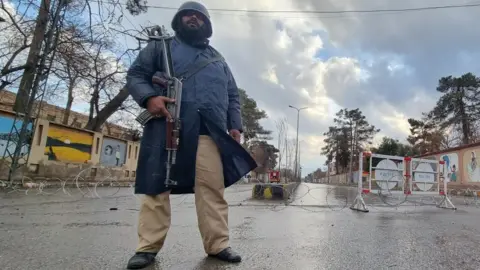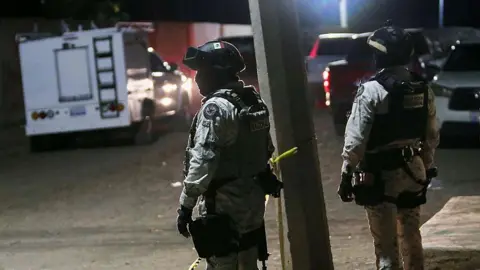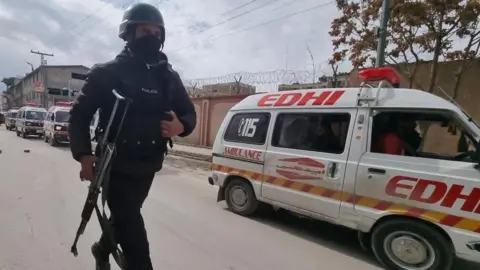
A series of gun and bomb attacks across Pakistan's south-western Balochistan province have resulted in the deaths of 31 civilians and 17 security personnel, according to the region's Chief Minister Sarfraz Bugti.
In a fierce response, security forces engaged in prolonged gun battles leading to the deaths of at least 145 attackers. The Balochistan Liberation Army (BLA), responsible for the assaults, claimed that the attacks were a coordinated effort against the state.
This violence underscores escalating tensions in a province rich in resources yet plagued by an ongoing insurgency that has sought greater autonomy and rights for ethnic Baloch people since Pakistan's independence.
Pakistan's government accuses India of supporting these insurgents, although such claims remain disputed. The recent incidents have targeted civilians in multiple locations, including markets, schools, and hospitals, as attackers dressed as civilians sought to inflict maximum disruption.
In the aftermath, Prime Minister Shehbaz Sharif has committed to a continued fight against terrorism, while local activists demand to address historical grievances over the exploitation of Balochistan's rich mineral resources for the benefit of the central government.
The BLA has been vocal in its accusations against the federal government, claiming that the local populace sees little benefit from the province's wealth, leading to persistent resentment and calls for an independent Baloch state.
The situation in Balochistan not only reflects local ethnic strife but also regional dynamics involving neighboring countries. The province, which covers nearly 44% of Pakistan's land area, represents a critical juncture for broader geopolitical considerations in South Asia.